
A groundbreaking study conducted by researchers at the Center for Healthy Brain Aging (CHeBA), UNSW Sydney, has shed light on a surprising factor that could be distorting crucial preclinical imaging results. The study, recently published in Magnetochemistry, delves into how standard laboratory diets may be causing misleading signals in Magnetic Particle Imaging (MPI), a key imaging tool used in medical research and clinical settings.
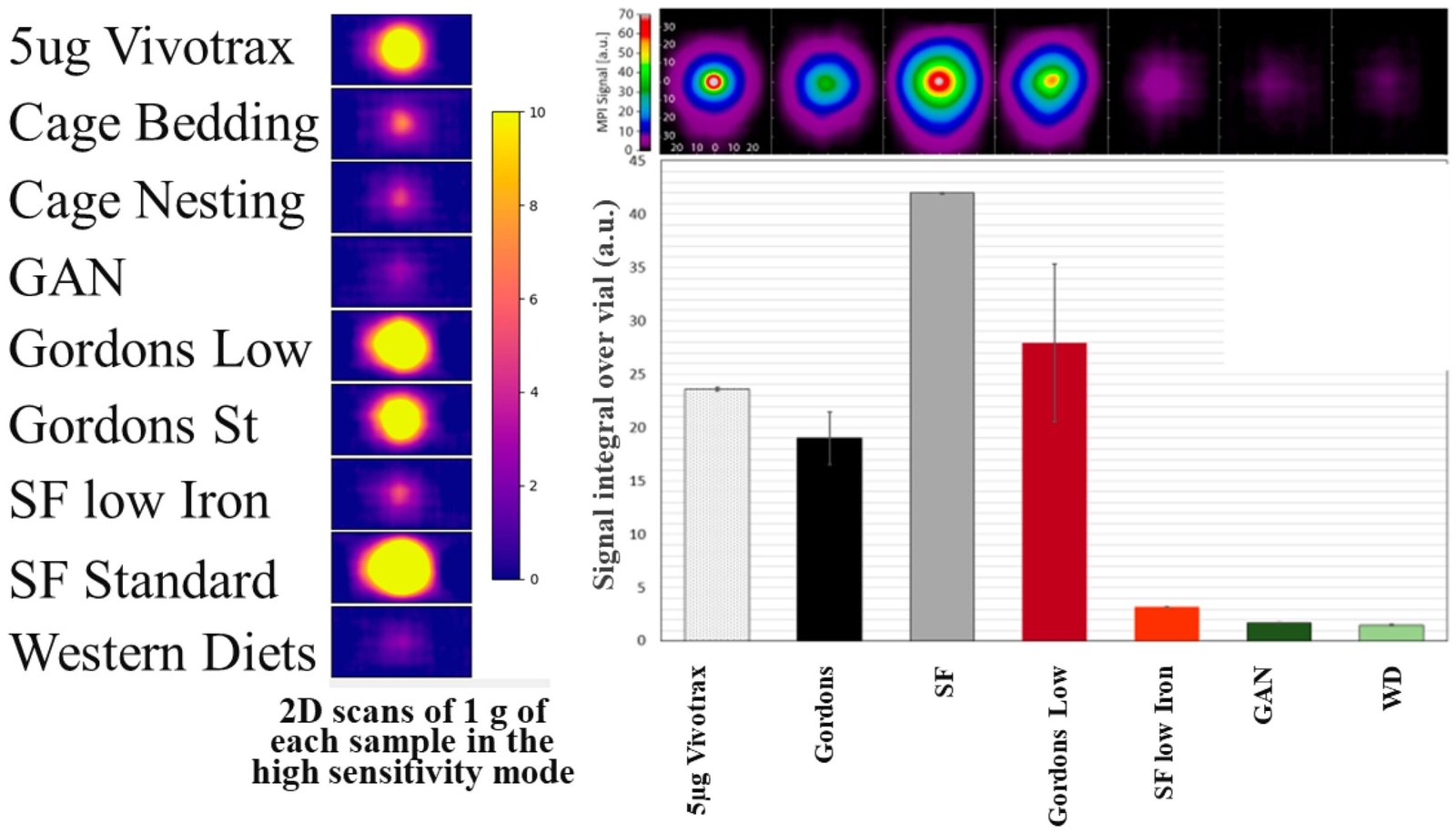
Lead author and Research Fellow Dr. Saeed Shanehsazzadeh explained, “Our research indicates that even mice that have not received any magnetic tracer injections can produce gut signals equivalent to a 5 μg dose of Vivotrax, solely due to their diet.” This background noise from standard lab diets could significantly impact the accuracy of MPI results, particularly when studying small tracer doses or sensitive regions near the gut.
The team systematically examined six commonly used laboratory mouse diets in Australia, including low-iron, Western, and specialty formulations, as well as short-term fasting protocols. The results revealed that standard lab diets generated MPI signal intensities up to 11 times higher than modified diets. Switching to a GAN or Western diet, or fasting for just 24 hours, reduced gut signals by approximately 90%. Additionally, low-iron diets proved to be effective in reducing interference, offering a non-invasive and low-stress approach to enhancing imaging clarity.
Professor Perminder Sachdev, Co-Director of CHeBA, emphasized the significance of the findings, stating, “Accurate imaging is paramount in research and diagnostics. By making a simple dietary adjustment, researchers can significantly diminish gut signal interference in MPI studies, potentially enhancing data quality across various biomedical research applications.”
The implications of this study extend beyond MPI, with the growing reliance on precise imaging for disease modeling, diagnostics, and drug testing. Refining preclinical methods, such as optimizing diets, is crucial for advancing research outcomes. Dr. Shanehsazzadeh highlighted the potential benefits, noting that such adjustments could save time, resources, and enhance experimental reproducibility.
For further details, the study titled “Evaluation of the Effects of Food and Fasting on Signal Intensities from the Gut Region in Mice During Magnetic Particle Imaging (MPI)” by Saeed Shanehsazzadeh et al. can be accessed in Magnetochemistry. The DOI for the research is 10.3390/magnetochemistry11080063.
This insightful research was made possible by the University of New South Wales. More information about their contributions to this study can be found on their official website.
