
Walking is a simple yet effective form of exercise that has numerous health benefits. A study conducted in 2023 found that just 4,000 steps a day can significantly reduce all-cause mortality risk. The more steps you take, the lower your risk of mortality. For every 1,000 extra steps taken per day, the risk decreased by 15%. This highlights the importance of incorporating walking into your daily routine.
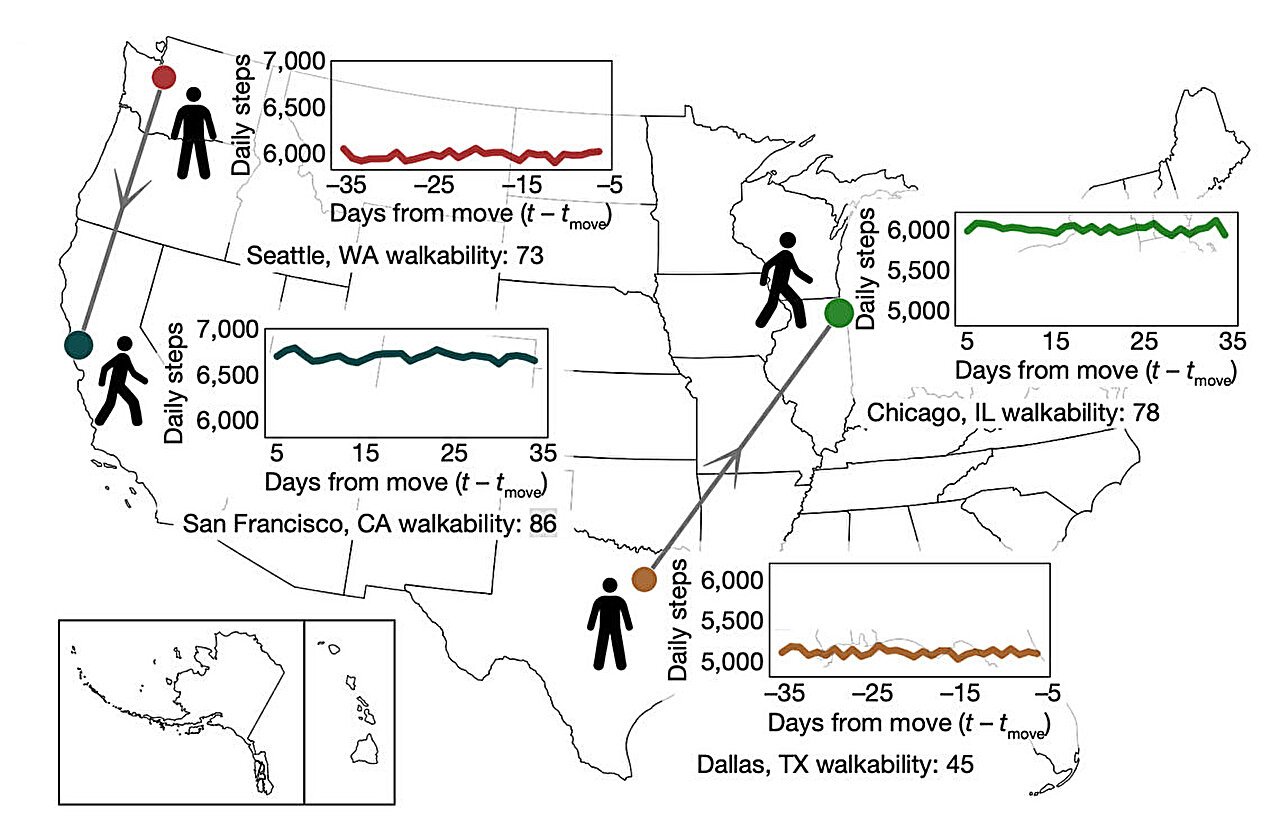
One way to encourage more walking is by living in a walkable city. Walk Scores have been used since 2007 to assess how easy it is for residents to walk to amenities like grocery stores and schools. Cities are assigned scores from 0 to 100, with higher scores indicating better walkability. Research has shown that people living in highly walkable areas tend to walk more. A recent study led by the University of Washington used data from the Argus step-tracking app to analyze the steps taken by individuals who moved among different cities in the United States.
The study found that when individuals moved to cities with significantly higher or lower Walk Scores, their daily step count also increased or decreased accordingly. On average, a change of 48 points in Walk Score resulted in a change of 1,100 steps per day. This correlation held true across different age groups, genders, and body mass indexes. For example, individuals who moved to New York City, known for its high walkability, increased their daily step count by 1,400 steps compared to their previous city.
Published in Nature, this study provides compelling evidence that the built environment plays a crucial role in determining how much people walk. The availability of walkable infrastructure can promote healthy behaviors like walking and increase physical activity levels in the population. Investing in public infrastructure that supports walking can have a positive impact on public health.
While the study offers valuable insights, it is important to note that the data set used may not be representative of the entire U.S. population. Factors such as the use of a step-counting app by participants can influence the results. Nevertheless, the findings underscore the importance of creating environments that promote walking and physical activity.
In conclusion, walking is a simple yet effective way to improve overall health and reduce the risk of various health conditions. Living in a walkable city can encourage individuals to walk more and lead a healthier lifestyle. By investing in walkable infrastructure, policymakers can create environments that support and promote physical activity for all residents.