
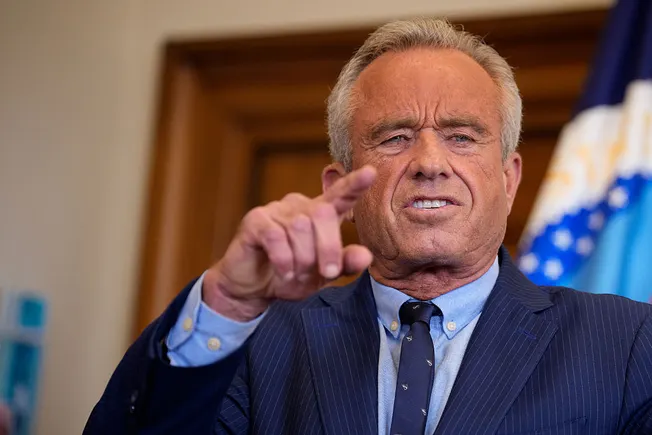
The Make America Healthy Again Commission recently unveiled leaked documents that shed light on potential new oversight of pharmaceutical companies’ direct-to-consumer advertising practices. Led by HHS Secretary Robert F. Kennedy Jr., the commission aims to crack down on DTC ads, especially on social media platforms where telehealth companies use deceptive marketing tactics.
The leaked draft strategy, published by Politico, outlines policy recommendations from a group assembled by President Trump and Kennedy. While the official version of the report has been delayed for coordination purposes, the draft suggests increased scrutiny of DTC advertisements by various government agencies, including the FDA, HHS, the Federal Trade Commission, and the Department of Justice.
Although Kennedy has previously advocated for a complete ban on pharma DTC advertising, the draft strategy takes a more moderate approach. Instead of an outright ban, the recommendations focus on enhancing oversight and enforcement of existing laws for DTC prescription drug advertising violations. The agencies plan to prioritize addressing the most egregious violations, particularly those by social media influencers and telehealth companies.
Lawmakers have also taken steps to regulate DTC advertising, with Senators Dick Durbin and Dr. Roger Marshall introducing the Protecting Patients from Deceptive Drug Ads Online Act earlier this year. The bill aims to close legal loopholes for pharma advertising, particularly targeting social media influencers and telehealth companies. While the FDA’s jurisdiction over telehealth companies has been questioned, the bill would clarify the agency’s authority in regulating prescription drug advertising.
Despite the push for increased oversight, the health agencies may face limitations in enacting a ban on DTC ads without congressional intervention. Legal experts suggest that the administration could pursue limiting DTC ads through mechanisms like requiring more robust disclosure of drug side effects in advertisements.
As the reform discussion continues, pharmaceutical companies are exploring new DTC marketing approaches. Companies like Pfizer, Eli Lilly, and Novo Nordisk have launched DTC channels for patients to connect with healthcare professionals and receive prescriptions. AstraZeneca recently introduced a DTC delivery platform for its self-administered flu vaccine, FluMist.
In addition to DTC advertising reforms, the Trump administration has also sought to lower drug prices by encouraging companies to sell their products directly to Americans at prices comparable to other nations. If reforms are implemented, pharmaceutical companies are likely to challenge them through legal means, citing First Amendment protections for truthful and non-misleading speech.
Overall, the landscape of DTC advertising in the pharmaceutical industry is evolving, with potential regulatory changes on the horizon. It remains to be seen how these reforms will impact the industry and how companies will adapt to new advertising regulations.
