
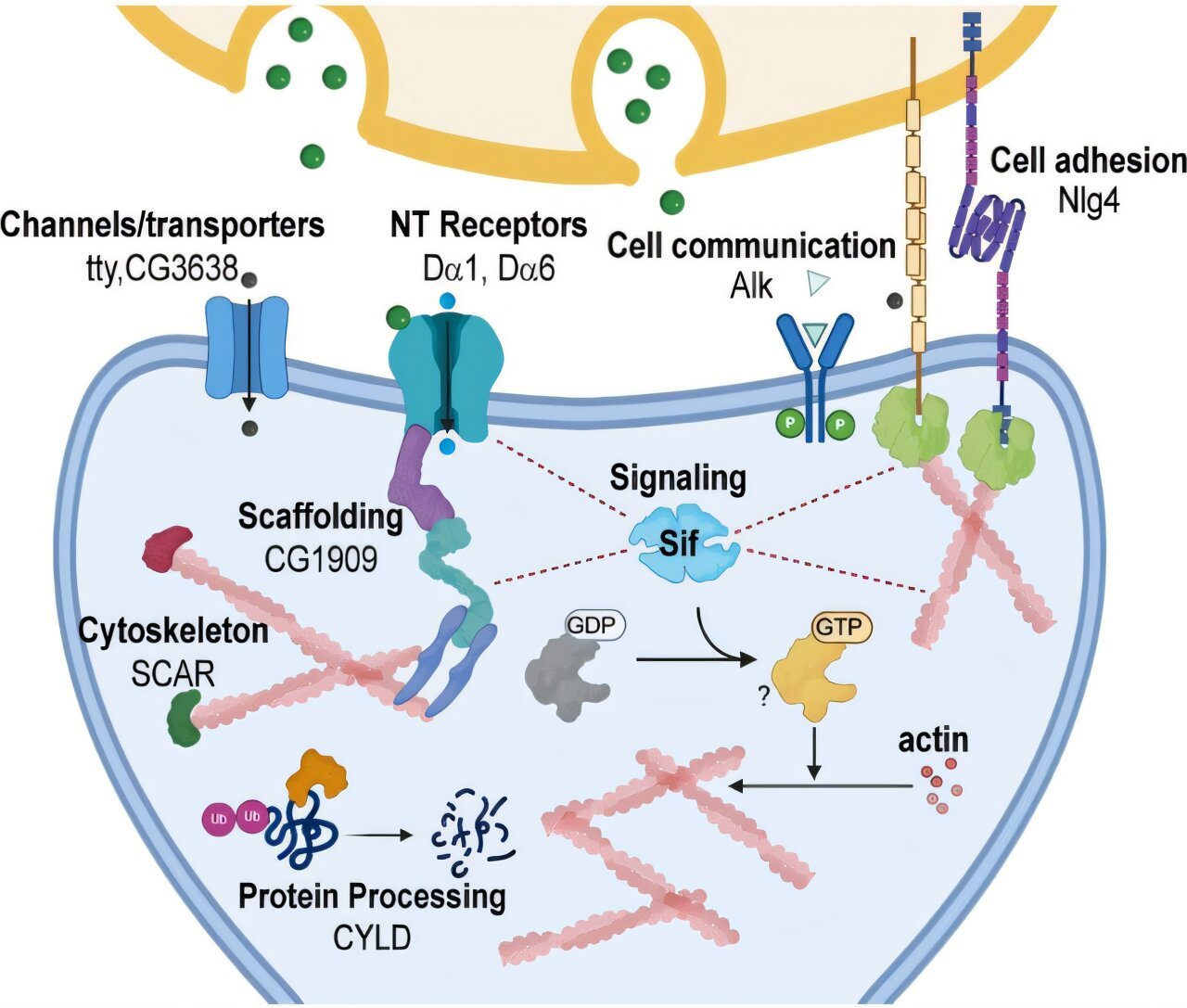
New research in the field of proteomics is shedding light on how neurotransmitter receptors change and behave as organisms develop. This groundbreaking work has the potential to enhance our understanding of synapse formation and function, which are crucial for communication between neurons.
The study, led by researchers at the Li Lab at HHMI’s Janelia Research Campus and the lab of Quan Yuan at NIH, focused on characterizing the proteins that make up nicotinic acetylcholine receptors in the fruit fly brain. These receptors, located on one side of the synapse, play a vital role in receiving incoming signals that trigger changes in cellular activity.
In fruit flies, these receptors are comprised of 10 distinct subunits, with specific configurations leading to different receptor functions. By profiling the proteins in these subunits in both larval and adult flies, the researchers discovered that the composition of these receptors changes as the insect develops. Interestingly, when one subunit is disrupted, another subunit steps in to compensate for the loss.
Furthermore, the team identified a key protein that regulates synapse function. This protein is present throughout all stages of development, and its removal causes the entire synapse to collapse. Through collaboration with the Electron Microscopy Support Team at Janelia, the researchers were able to observe this collapse in high resolution.
These findings lay the foundation for understanding the molecular makeup, regulation, and adaptability of synapses. Insights into how synapses form and function could provide valuable information on their role in aging and neurological diseases.
The methodology employed in this study can be applied to studying various types of synapses and different organisms, offering a deeper understanding of the brain’s functional evolution.
For more information on this research, readers can refer to the publication “Molecular organization of central cholinergic synapses” in the Proceedings of the National Academy of Sciences (2025), DOI: 10.1073/pnas.2422173122.
This research was conducted by the Howard Hughes Medical Institute and signifies a significant advancement in our knowledge of synapse dynamics and neurotransmitter receptor behavior. By unraveling the mysteries of synaptic function, scientists are paving the way for new breakthroughs in neuroscience and potential treatments for neurological disorders.