
Scientists at CSIRO, Australia’s national science agency, have identified a new virus in Australian flying foxes, a discovery that strengthens Australia’s preparedness against emerging infectious diseases.
The findings are published in the journal Emerging Infectious Diseases.
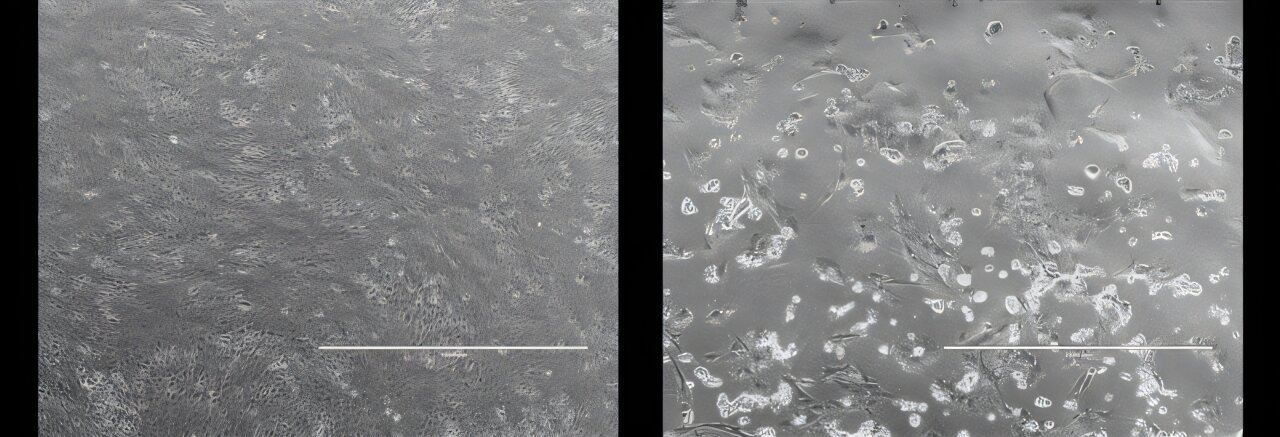
Named Salt Gully virus, the novel henipavirus was discovered in bat urine samples collected in Queensland. CSIRO researchers were able to isolate and grow Salt Gully virus in CSIRO’s Australian Centre for Disease Preparedness (ACDP) high containment laboratory.
Salt Gully virus belongs to the same virus family as Hendra virus, which has caused fatal infections in horses and humans in Australia, and Nipah virus, known for causing outbreaks in humans across Asia.
Jennifer Barr, experimental scientist at CSIRO’s ACDP, said henipaviruses are recognized by the World Health Organization as priority pathogens for research, and the discovery increases knowledge of this important virus group.
“Although Salt Gully virus is new to science, there’s no cause for public alarm,” Mrs. Barr said. “We’ve detected Salt Gully virus in bat samples dating back to 2011, which shows it’s been circulating in nature for over a decade without any evidence of it causing illness in animals or humans,” Mrs. Barr said.
This discovery provides a foundation for further research into how the virus compares with Hendra and Nipah, including its potential to cause disease.
“Early findings show Salt Gully virus does not rely on the same cell receptors as Hendra or Nipah viruses, suggesting that the infection process will be different. As a result, we can’t predict whether it will result in future disease outbreaks in humans or animals,” Mrs. Barr said.
By understanding these viruses, researchers can better prepare for potential outbreaks.
“Now that we’ve identified the virus, diagnostic tests can be developed. This means if a spillover from bats and disease outbreak were to occur, we’d have the tools to detect this virus earlier—enabling timely measures to prevent further spread,” Mrs. Barr explained.
The existing Hendra vaccine for horses remains effective against Hendra virus disease, and Salt Gully virus does not compromise this protection. Its discovery does not change the current health risk posed by bats.
ACDP is a vital part of Australia’s preparedness for disease outbreaks. Its microbiologically and physically secure facilities allow teams to work safely with animal and zoonotic diseases while keeping them securely contained.
The research marks a significant step forward in understanding viruses that originate in wildlife and could pose a risk to livestock and human health.
More information:
Jennifer Barr et al, Novel Henipavirus, Salt Gully Virus, Isolated from Pteropid Bats, Australia, Emerging Infectious Diseases (2025). DOI: 10.3201/eid3109.250470
Citation:
Newly discovered virus in bats helps strengthen Australia’s defenses against emerging infectious disease (2025, September 2)
retrieved 2 September 2025
from https://medicalxpress.com/news/2025-09-newly-virus-australia-defenses-emerging.html
This document is subject to copyright. Apart from any fair dealing for the purpose of private study or research, no
part may be reproduced without the written permission. The content is provided for information purposes only.
