
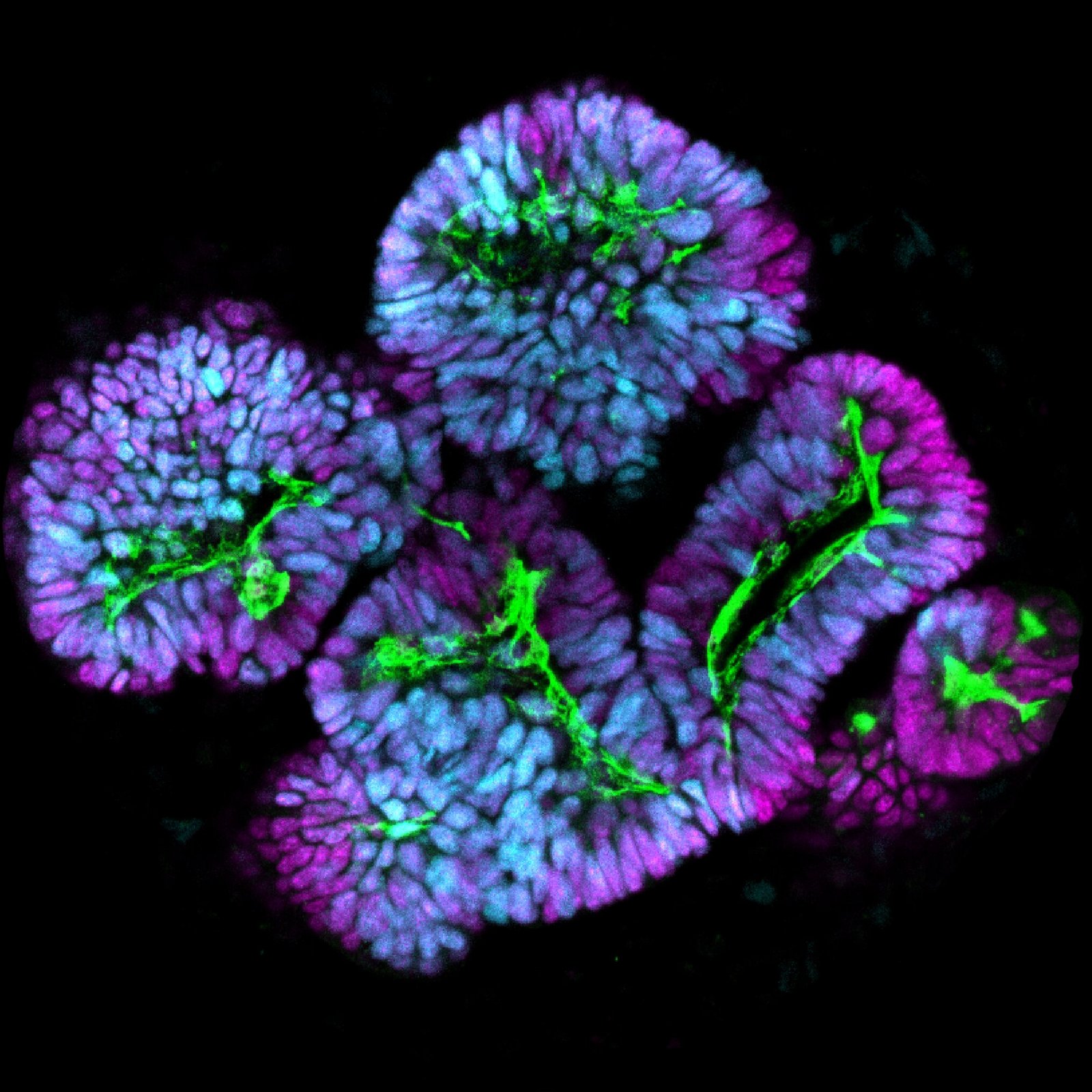
The field of regenerative medicine is making significant strides in unlocking the secrets of creating lab-grown kidney cells with preclinical value. USC Stem Cell scientists have made a groundbreaking discovery that paves the way for generating specific kidney cell types on demand, which can be invaluable for studying new therapeutics, congenital kidney diseases, and drug-induced nephrotoxicity.
By studying the formation of nephrons during normal human development, researchers have uncovered the process by which cells organize along a longitudinal axis to create nephrons. Each nephron consists of a proximal end that filters impurities into urine and a distal end that drains the urine into collecting ducts.
In a series of studies published in Nature Communications, USC Stem Cell scientists used human stem cell-derived organoids to identify the signals that drive the differentiation and organization of different nephron cells. They found a “switch” that directs precursor cells towards either a proximal or distal identity, allowing for the generation of nephron cells on demand.
By modulating key molecular signals and pathways, such as BMP, WNT, and FGF, researchers were able to encourage the differentiation of stem cells into specific nephron cell types. This led to the development of lab-grown proximal tubule cells that exhibited behavior similar to those in a human kidney when exposed to various substances, including chemotherapy drugs.
The researchers also discovered that the lab-grown proximal tubule cells lacked normal signals that control the formation of the nephron’s proximal-to-distal axis, which is crucial for well-organized proximal tubules. By tweaking cell signaling, they were able to encourage these cells to adopt a proximal tubule identity and function more like those in a human kidney.
Overall, these findings are a significant step forward in the field of regenerative medicine, providing powerful tools for studying kidney development, congenital diseases, injury, and physiology. The knowledge gained from these studies could lead to the generation of functional kidney cells and nephrons for potential research and therapies in the future.