
Synaptrix Labs, a startup specializing in wearable brain-computer interface technology, recently received seed funding from Mark Cuban to boost its commercial progress.
The company’s Neuralis wearable BCI headset targets the motor cortex using dry sensors and on-device signal processing to translate EEG signals into precise wheelchair navigation commands. Synaptrix Labs is focusing on wheelchair users as its initial market through a clinical trial with Columbia University.
Powered by NeuroDiffusion, an AI platform enabling the development of clinical and consumer applications, Synaptrix Labs is paving the way for advancements in neurotechnology markets. CEO and co-founder Aryan Govil emphasized the importance of deep learning in the future of neurotech, highlighting the significance of AI in signal processing over invasive implants or custom sensors.
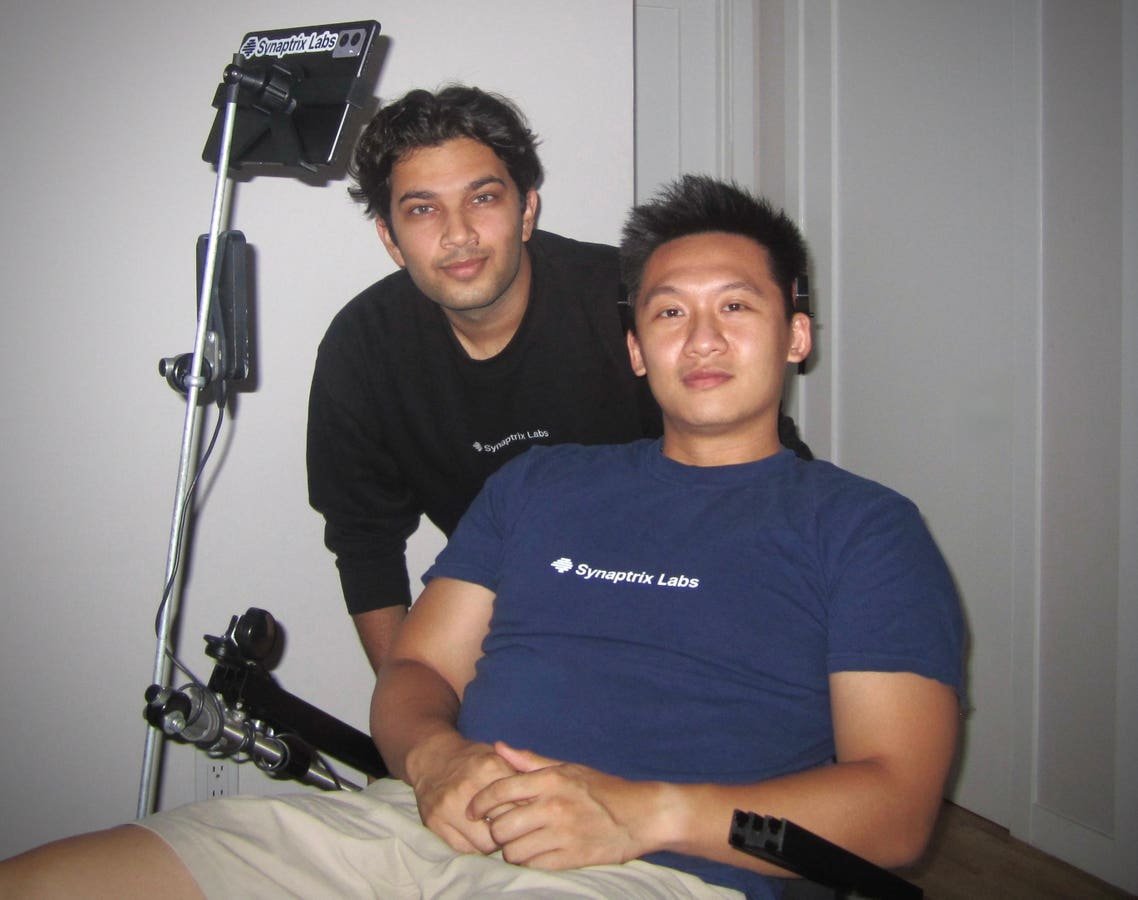
Synaptrix Labs co-founders Aryan Govil and Eric Yao
Synaptrix Labs
Govil’s background in a clinical research lab at NYU Langone led to the founding of Synaptrix Labs in 2023, with a focus on innovation for individuals with neurological impairments. The company’s collaboration with IDUN Technologies will integrate NeuroDiffusion’s artifact removal AI into EEG headset hardware for research and development purposes.
Exploring the Neurotech Market
Synaptrix Labs, “building the next generation of non-invasive brain interfaces,” is the latest healthcare investment by Mark Cuban
Markcubancompanies.com
Mark Cuban’s investment in Synaptrix Labs aligns with his vision of improving accessibility and affordability in US healthcare. The undisclosed funding amount is estimated to be around $8-10 million, signaling potential growth in the wearable interfaces market.
Advancements in AI signal processing and deep learning models are driving innovation in the neurotech sector, with companies like Axion Click also making strides in EEG technology. The focus on non-invasive solutions for motor impaired individuals is reshaping the landscape of assistive technology.
While mainstream adoption of BCI technology may still be on the horizon, partnerships like the one between Synaptrix Labs and IDUN Technologies are propelling the development of wearable devices with enhanced capabilities. The future of wearable EEG-based interfaces looks promising, with potential applications in both assistive tech and consumer markets.