
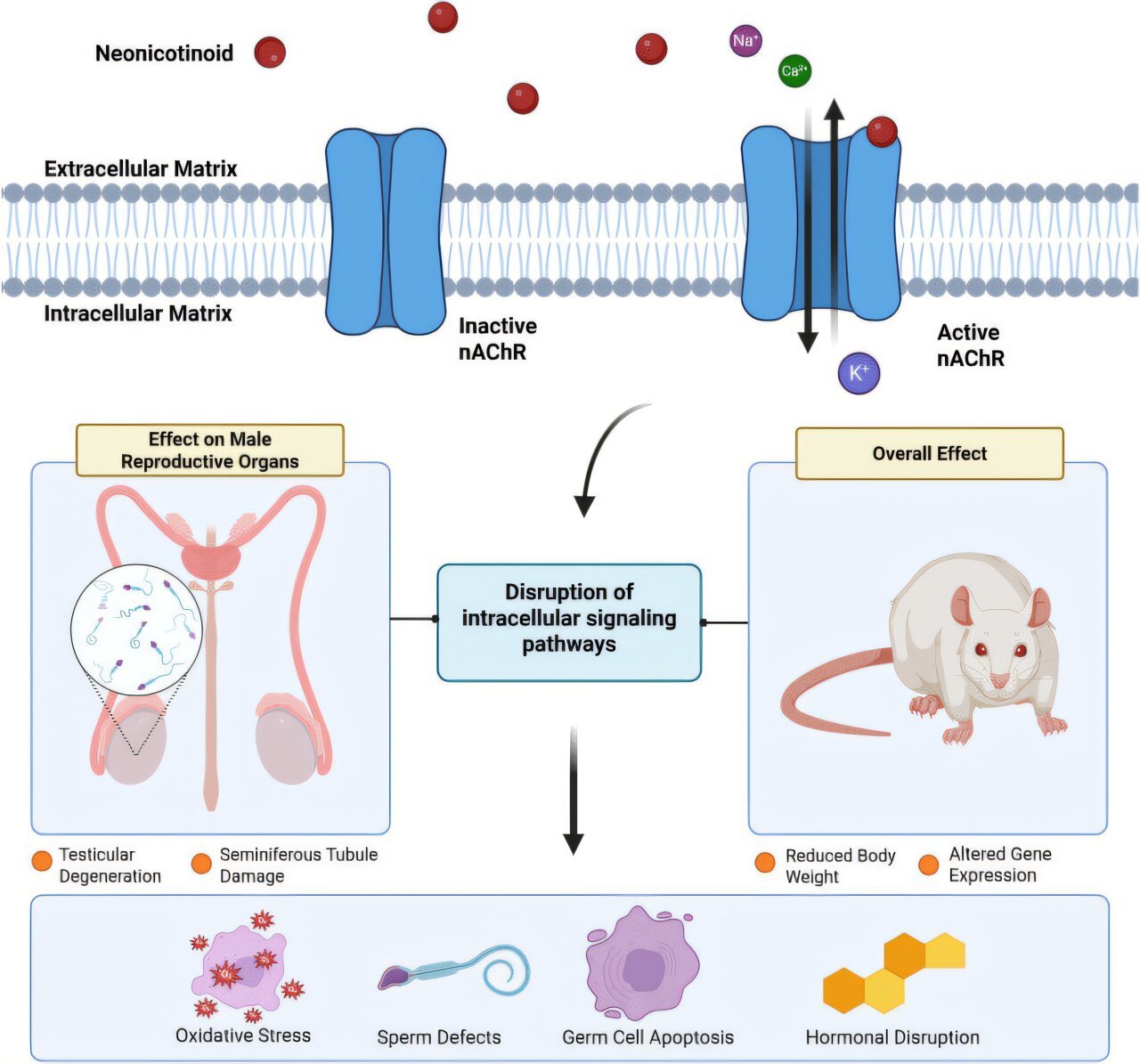
Contemporary agricultural practices have made it challenging to avoid consuming chemicals that could potentially harm the body. In a recent collaborative study between George Mason University’s College of Public Health and College of Science, alumna Sumaiya Safia Irfan and student Veronica Sanchez reviewed 21 experimental studies conducted between 2005 and 2025. The findings consistently pointed towards insecticide exposure negatively impacting human health, particularly male reproductive health.
The research, titled “Reproductive risk of Neonicotinoids: A review of male rodent studies,” was published in the Journal of Environmental Research. Neonicotinoid pesticides, also known as neonics, are widely used insecticides in agriculture. These chemicals are absorbed into the soil, water, and plants when sprayed on crops, eventually making their way into the human food chain. The study focused on how neonics affect male reproductive health in rodents, revealing concerning effects on sperm quality, hormone disruption, and testicular tissue damage.
Veronica Sanchez, a master’s student in chemistry and a research assistant at the George Mason Center for Applied Proteomics and Molecular Medicine, emphasized the harmful impact of neonicotinoid exposure on male rats and mice. While the exact effects on human reproductive systems are still largely unknown, the study underscores the need for further investigation into the potential risks posed by these widely used pesticides.
Dean of the College of Public Health, Melissa Perry, a renowned environmental health epidemiologist and contributing author to the study, highlighted the significant growth in neonicotinoid insecticide use in U.S. agriculture over the past decade. With routine exposures affecting a large portion of the population, conclusive research is essential to understand the implications for public health.
In light of these findings, it is crucial for individuals to be mindful of pesticide exposure through food consumption. While washing produce thoroughly and minimizing conditions that attract pests can help reduce exposure, systemic application of neonics makes complete removal challenging. The best approach is to shop responsibly and be aware of the products being purchased to minimize exposure to harmful chemicals.
As the study urges further research into the effects of neonicotinoids on humans and the development of mitigation strategies, it is essential for consumers to stay informed and make informed choices to protect their health. By raising awareness about the potential risks associated with pesticide exposure, individuals can take proactive steps to safeguard their well-being and that of future generations.