
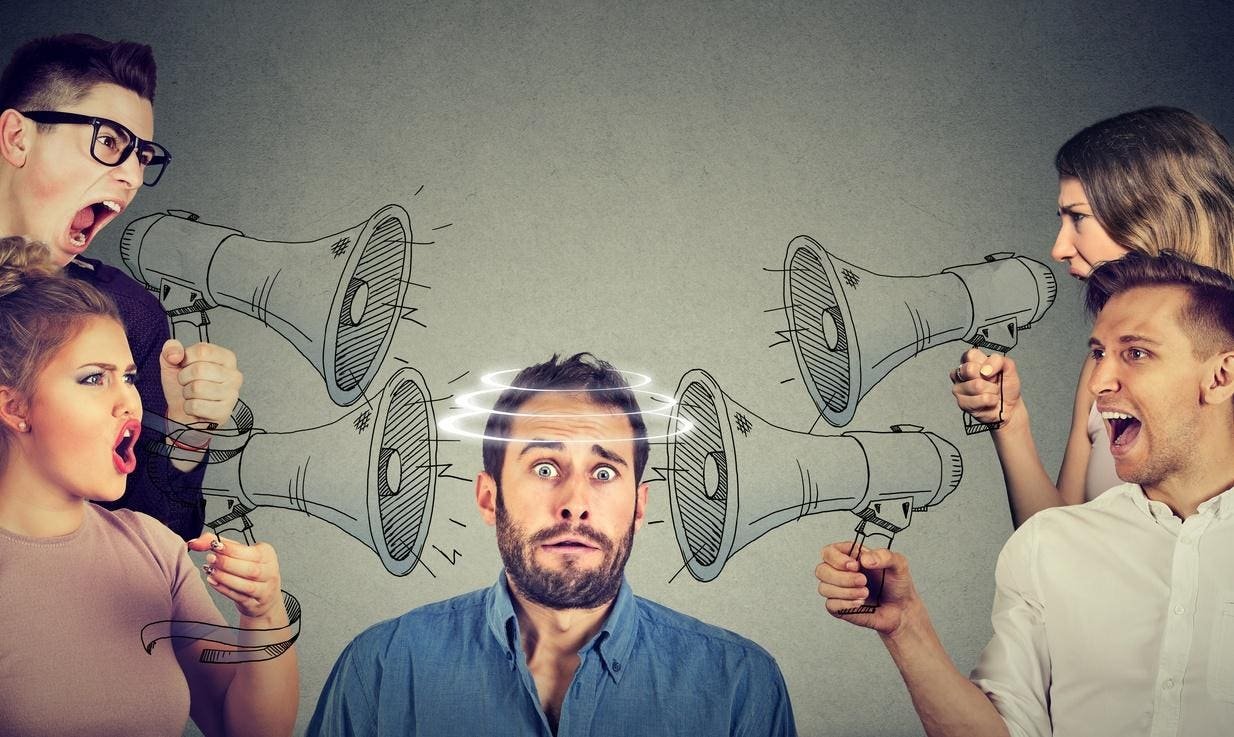
Sensational political coverage and nonstop breaking-news alerts can elevate stress and worsen mental and physical health.
getty
The media landscape is a constant battlefield these days. This increasingly creates an environment marked by political polarization. According to data from the Pew Research Center in 2022, 72% of American Republicans and 63% of Democrats believed people in the opposing party were more immoral than other Americans, up sharply from 2016.
Here’s the problem: media-stoked political polarization can contribute to worse mental and physical health for people and their community.
Consider these examples of polarized content.
From the right, Fox News panelist Carl DeMaio said “Democrats are enabling an evil enterprise” in the context of border-policies for unaccompanied minors. Fox’s The Five, host Greg Gutfeld also commented: “Democrats know their policies are evil”, treating political opponents not just as wrong but morally corrupt.
From the left, MSNBC’s Chris Hayes wrote in an opinion piece titled “Let’s not sugarcoat it: Trump is running a textbook fascist campaign”, describing the same policy as a threat to democracy and safety in the country.
Both sides of the aisle increasingly frame political action not as policy disagreement but as existential threat. This emotional framing captures attention and drives outrage. This is exactly what media platforms are optimized to do. It keeps people watching and endlessly scrolling.
Here are ways that increasing political polarization is negatively affecting individual and community health outcomes, and strategies for people to protect themselves.
Political Polarization Harms Mental And Physical Health
Chronic exposure to divisive political content and viewing political opponents with moral condemnation creates sustained negative emotional states. Feelings of fear, resentment, helplessness and mistrust are strongly linked to higher rates of anxiety and depression. In particular, content that frames opponents as existential enemies intensifies emotions and increases long-term psychological distress.
Chronic exposure to divisive political messaging heightens fear and stress, contributing to rising rates of anxiety and depression.
getty
Election cycles are potent triggers. During the 2020 election, symptoms of anxiety and depression rose steadily in the months leading up to Election Day and peaked around the election, surpassing even the early months of the COVID pandemic. After the 2016 election, adults in states that supported Hillary Clinton reported tens of millions more days of poor mental health in December compared to the weeks before the election. Today, political media narratives have intensified, potentially contributing to even worse politically fueled mental health problems.
Chronic political stress can also lead people to engage in negative health behaviors like avoiding exercise, emotional eating, drinking more alcohol or smoking, driving health risks. Reduced physical activity can increase weight gain and obesity. Stress elevates blood pressure and impairs glucose metabolism. Poor sleep and substance use weaken immune function and increase inflammation.
Frequent exposure to fear-based political messaging also triggers the body’s stress response leading to elevated cortisol, a higher heart rate and systemic inflammation. When this happens repeatedly, it increases the risks chronic hypertension, cardiovascular disease, impaired immune function and poor metabolic health. Presidential elections are directly linked to spikes in hospitalizations for heart attacks and strokes.
Political Polarization Damages Relationships
Conflict tends to occur across political lines. Families argue. Friendships end. Communities grow less tolerant. When people view political opponents as threats, they distance themselves socially and are less likely to trust people with different views. These reactions erode social cohesion, a key protective health factor.
Political conflict can escalate into hostility, fueling stress and harming mental and physical health.
getty
Social media intensifies the issue. Content that vilifies the out-group is especially engaging. Algorithms amplify antagonistic content, exposing users to more extreme rhetoric, reducing opportunities for constructive dialogue. Over time, this fragments social networks and polarizes both online and in-person communities.
Social isolation is strongly linked to higher mortality and worse outcomes across chronic diseases. Isolation increases the risk of cardiovascular disease, diabetes, disability and dementia. It also weakens immune function and raises chronic inflammation.
Political Polarization Weakens The Institutions That Protect Public Health.
Trust in government, public health agencies, scientific bodies and the medical system is essential for effective health communication and coordinated action. When political identity determines whether people trust institutions, their ability to function declines.
Political polarization erodes trust in the institutions that keep communities safe, weakening everything from vaccination efforts to emergency response.
getty
Public health recommendations become harder to implement. Groups become selective about which guidance they believe. Participation in preventive programs—such as vaccination—falls. During health emergencies, polarized communities respond more slowly and less effectively, compromising their ability to contain outbreaks, respond to natural disasters or coordinate emergency care.
Polarization also disrupts policymaking. When political actors focus on symbolic conflict rather than problem-solving, investments in mental health, primary care, emergency preparedness and public health infrastructure may be delayed or even blocked.
Here’s How People Can Mitigate The Health Dangers Of Political Polarization
First, limit high conflict media exposure. News feeds should be curated to choose outlets that emphasize reporting over commentary. Turn off autoplay, disable push alerts and set designated “news windows” to avoid constant threat cues from politically charged media. Second, diversify the media diet. Follow sources that provide balanced information or cross-cutting viewpoints. Exposure to a broader mix of perspectives reduces demonizing the “other side” and lowers emotional reactivity.
Third, prioritize real relationships. Investing time in friends, family and community activities unrelated to politics. This builds stronger social connections, counteracting the isolation that political polarization fuels. Fourth, create boundaries around political talk. Establishing politics-free times or spaces–such as meals or bedtime–can prevent emotional spillover into daily life.
Fifth, use stress reduction strategies during election cycles and surrounding politically charged events. Exercise, mindfulness and scheduled breaks from political content can help manage the predictable spikes in anxiety and physiological stress. Sixth, engage locally, not just online. Participating in community organizations, volunteering or addressing local issues builds agency and reduces the helplessness that political drama often creates.
Seventh is to directly engage with individuals on the other side of the political aisle. A striking example is Bill Maher’s unexpectedly cordial meeting with Donald Trump. This showed that even people publicly cast as adversaries can find moments of civility and connection face-to-face. Even small moments of respectful exchange like this can interrupt the cycle of dehumanization that fuels polarization.
Ultimately, the political culture we consume matters when it comes to health. The data increasingly show a society viewing fellow citizens as moral adversaries fueled by a narrative where media organization profit from promoting outrage. This influences our stress levels, our behaviors, our mental health, our physical health and the strength of our communities.
When the media promotes political polarization to keep people engaged, learning to quiet this noise isn’t just a civic responsibility. It’s necessary for safeguarding well-being.