
The global HIV epidemic continues to affect millions of people, with 40 million individuals living with the virus worldwide. While current therapies can help manage HIV symptoms by reducing viral load in the body, there is still no cure for HIV. Advancements in drug development and the quest for a cure hinge on answering fundamental questions about how HIV infiltrates and replicates within host cells.
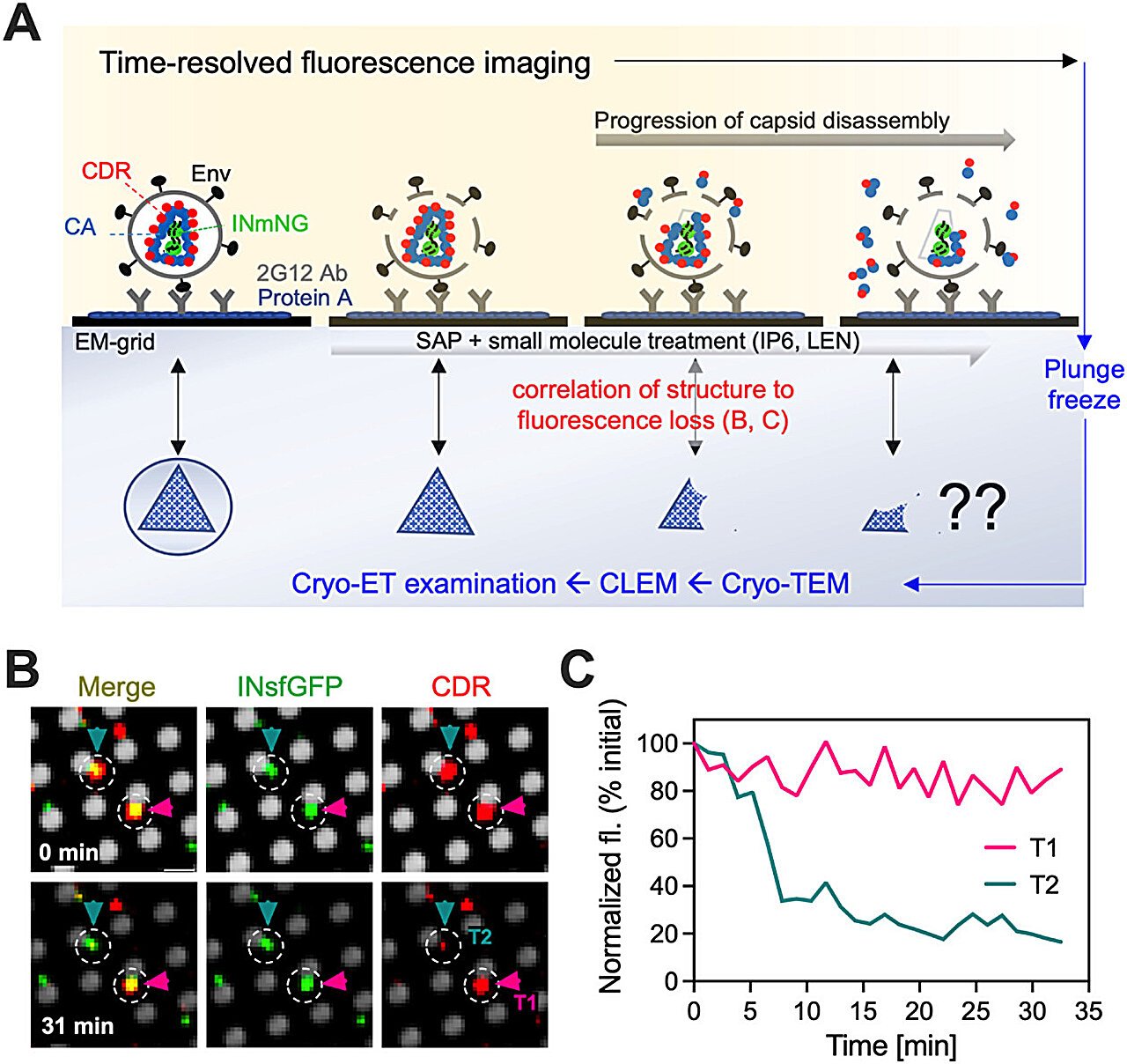
A team of researchers at the Salk Institute, spearheaded by Associate Professor Dmitry Lyumkis and graduate student Zaida Rodriguez, have devised a groundbreaking workflow for studying capsids in HIV-1, the predominant strain of the virus. Capsids are protein structures that encapsulate the viral genome and facilitate the invasion of host cells by HIV. By employing a combination of advanced imaging techniques such as correlative light and cryo-electron microscopy, the researchers were able to observe the dynamic changes in HIV-1 capsids over time. Their findings were recently published in the prestigious journal ACS Nano on August 22, 2025.
In 2024, a drug called lenacapavir made headlines for its ability to disrupt viral replication by altering the structure of HIV-1 capsids, earning it the title of breakthrough of the year by Science magazine. However, limitations in workflow and technology have hindered detailed structural studies of capsid formation, disassembly, and stabilization.
The newly developed workflow promises to unlock a deeper understanding of how capsid morphology evolves under different conditions, paving the way for the identification of novel strategies to target capsids more effectively and combat HIV-1. Importantly, this innovative approach can also be adapted to investigate structural changes in other viruses beyond HIV.
For those interested in delving into the technical details of this research, the paper titled “Time-Resolved Fluorescence Imaging and Correlative Cryo-Electron Tomography to Study Structural Changes of the HIV-1 Capsid” by Zaida K. Rodriguez et al. can be accessed in ACS Nano (2025) with the DOI: 10.1021/acsnano.5c06724.
This groundbreaking work was made possible by the dedicated team at the Salk Institute, underscoring their commitment to advancing scientific knowledge and pushing the boundaries of HIV research. To stay updated on the latest developments in this field and other scientific endeavors, visit the Salk Institute’s website.
In conclusion, the innovative workflow developed by the Salk Institute researchers represents a significant step forward in our understanding of HIV-1 capsids and opens up new possibilities for targeted drug development and potential cures for HIV. This research underscores the importance of ongoing scientific exploration in the fight against infectious diseases.