
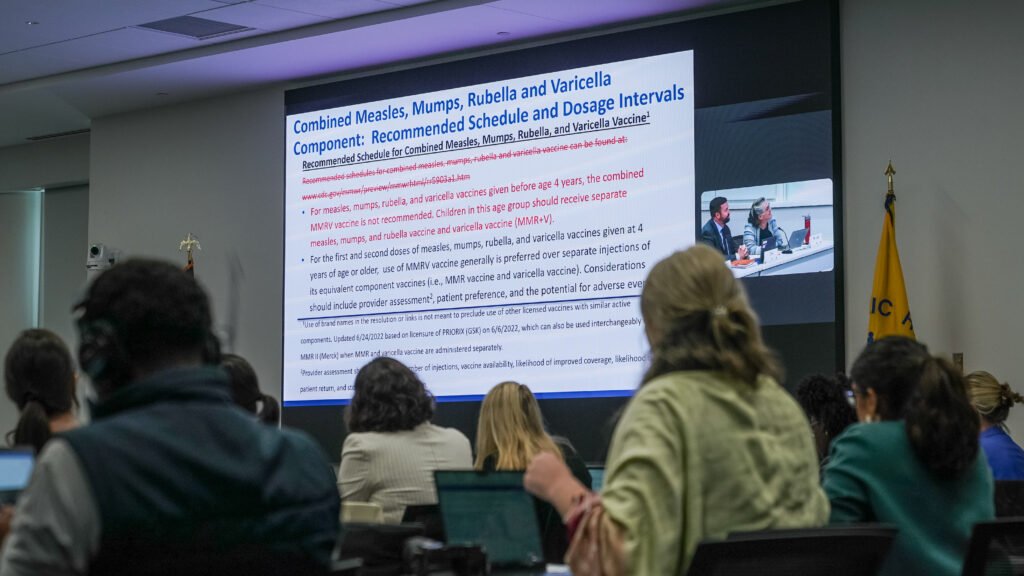
The recent actions of Health and Human Services Secretary Robert F. Kennedy Jr. and his handpicked panel of vaccine advisers have raised concerns about the declining public trust in vaccines. The Advisory Committee on Immunization Practices (ACIP) has veered away from its science-based decision-making framework, sparking debate and skepticism about vaccine safety and efficacy.
During a recent two-day meeting, the panel made several notable decisions. They restricted the MMRV shot to children over the age of 4 due to concerns about febrile seizures, and reconsidered their support for broad Covid vaccine administration. The panel also postponed a vote on delaying hepatitis B shots given at birth. These decisions, if approved by the CDC, could have far-reaching implications on vaccine policies.
The meeting also highlighted internal turmoil within the CDC, with Director Susan Monarez being dismissed over vaccine policy disagreements. Monarez testified that Kennedy pressured her to approve vaccine recommendations without proper evidence. Senator Bill Cassidy expressed skepticism about the panel’s decisions, calling for caution in accepting their recommendations.
The panel’s approach to vaccine policy has been criticized for deviating from established norms and lacking transparency. Medical groups have raised concerns about the erosion of the committee’s integrity and the selective use of data to justify conclusions. The lack of input from leading medical organizations and CDC experts has also raised red flags about the panel’s decision-making process.
Members of the panel, including researchers and healthcare professionals, have questioned the CDC’s data presentations and raised theoretical concerns about vaccine safety. Some have expressed doubts about the long-term effects of vaccines, while others have scrutinized the reliability of CDC data on Covid hospitalization rates. These debates have led to a disjointed discussion on vaccine safety and efficacy.
Despite the controversies surrounding the panel’s decisions, they remain committed to their mission of reviewing all vaccines periodically. While drama continues to surround their actions, panel members maintain that their decisions are driven by science and engagement. The future of vaccine policy remains uncertain as the panel prepares to review additional vaccines, including those for pregnant individuals.
In conclusion, the recent ACIP meeting has shed light on the complexities of vaccine decision-making and the challenges of restoring public trust in vaccines. As debates continue, it is essential to prioritize evidence-based decision-making and transparency in vaccine policies to ensure public health and safety.