
In this week’s edition of The Prototype, we delve into the potential risks of relying too heavily on AI for decision-making, the rise of mass-produced satellites, a startup aiding NASA in space debris detection, and more. To receive The Prototype directly in your inbox, subscribe here.
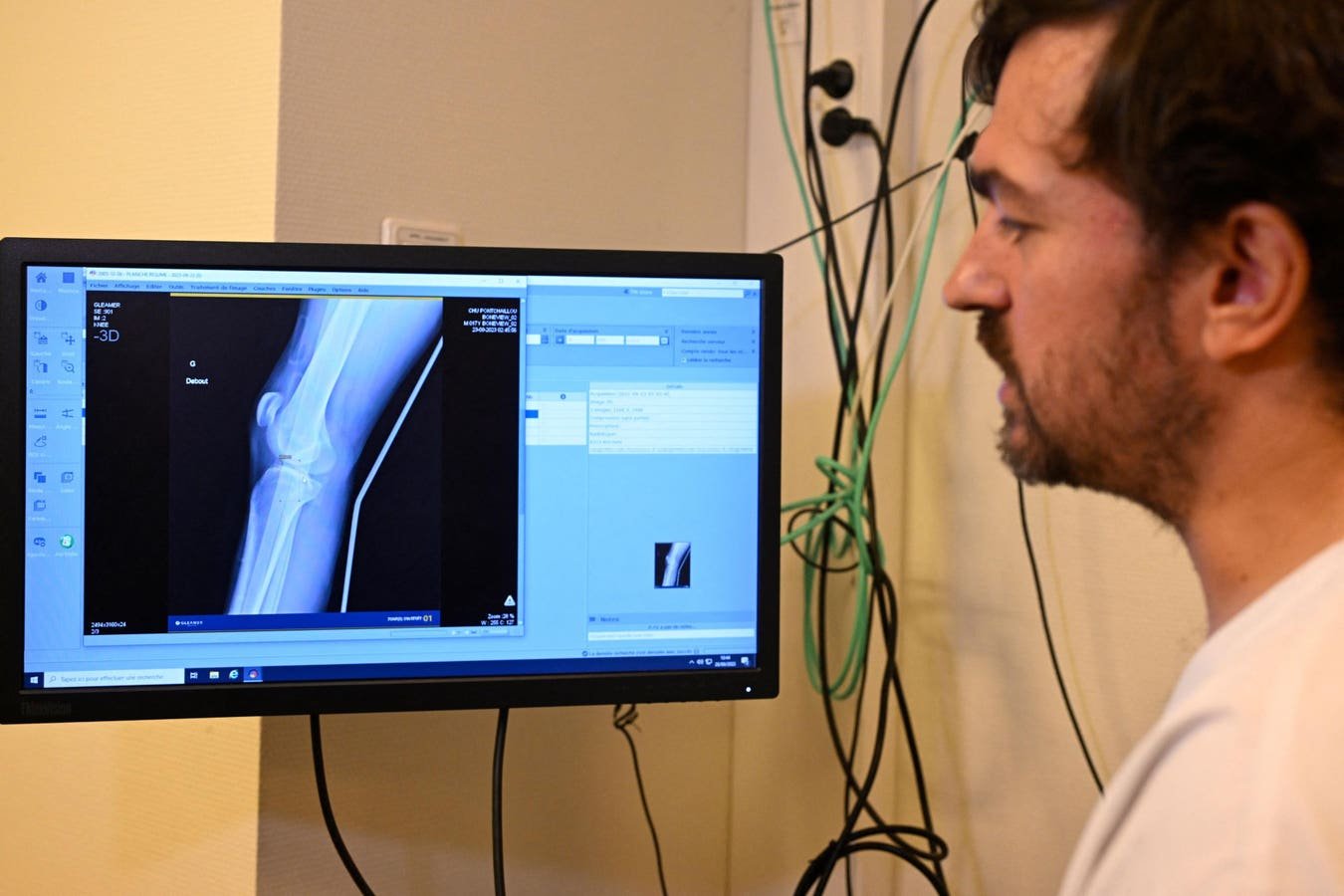
A recent study published in The Lancet explored the effects of an AI tool used in colonoscopies on the diagnostic skills of physicians. The study revealed that doctors’ ability to identify certain abnormalities decreased after relying on AI assistance. This raises concerns about the potential negative impact of excessive reliance on AI, especially in environments where such tools are not universally implemented.
Furthermore, the study highlights the importance of understanding when to utilize AI and when to rely on human expertise, as overdependence on AI could lead to a degradation of vital skills. Similar concerns have been observed in other fields, such as the detrimental effects of relying solely on GPS for navigation on spatial memory.
As we navigate the evolving landscape of AI technology, it becomes increasingly crucial to strike a balance between leveraging its capabilities and preserving essential human skills.
Stay informed with The Prototype.
Apex Aims to Revolutionize Satellite Production with Mass Manufacturing Approach
Satellite manufacturing has traditionally been a bespoke industry, characterized by custom spacecraft tailored to specific missions, resulting in elevated costs and delays.
Addressing the growing demand for small satellites in low-Earth orbit, Los Angeles-based Apex has introduced standardized satellite platforms as a faster and more cost-effective alternative. The company offers three standardized satellite structures equipped with power and control systems, allowing clients to customize them rapidly with sensors and payloads, including advanced capabilities like missile defense systems.
Following an automotive industry model, Apex presents various satellite versions with optional features such as enhanced power capacity, advanced communication systems, and propulsion choices ranging from electrical to chemical.
“It’s a take it or leave it scenario,” stated CEO Ian Cinnamon.
Explore the full story on Forbes.
DISCOVERY OF THE WEEK: A Device Enabling Communication through Thoughts
Neurological conditions like ALS can impede communication abilities, leading to challenges in speech. While existing devices offer speech assistance, they often operate at a slower pace compared to natural speech. A team of researchers has developed a new device that holds the potential to address this issue: a brain-implanted computer system capable of detecting neural signals associated with speech-related thoughts and translating them into verbal communication. While still in its early stages, this technology opens doors to future advancements in brain-computer interfaces that could enable rapid, thought-based communication for patients.
FINAL FRONTIER: LeoLabs Collaborates with NASA to Mitigate Space Debris Risks
LeoLabs, a space startup based in Menlo Park, California, has established a partnership with NASA to assess its data for enhancing the evaluation of collision risks involving satellites and spacecraft. The collaboration aims to integrate LeoLabs’ data, gathered from multiple radar systems worldwide, with the Air Force radar systems utilized by NASA for space object tracking. (For more insights on LeoLabs, refer to a previous article I authored about the company a few years ago.)
FORBES PREDICTS: Prolonging Canine Lifespans
Each year, Forbes identifies 25 venture capital-backed enterprises for the Next Billion-Dollar Startups List, spotlighting companies poised to reach a valuation of $1 billion or higher. Among this year’s honorees is biotech startup Loyal, dedicated to developing medications that could extend the lifespans of dogs. The company is currently conducting clinical trials on hundreds of canines to test the efficacy of its drug, with plans for market release in the near future.
Having monitored Loyal’s progress over the years, including its founder Celine Halioua’s recognition in our 30 Under 30 list, I previously covered the company’s advancements. If successful in enhancing canine longevity, Loyal aspires to expand its impact to human longevity, envisioning a future where individuals can access life-extending treatments for their loved ones.
ADDITIONAL CONTENT FROM MY PERSPECTIVE THIS WEEK
Earlier this week, I spotlighted biotech startup Tahoe Therapeutics, which secured $30 million in funding to scale up its dataset concerning molecular interactions within living cells. With a goal to train AI models for simulating cellular behaviors and accelerating drug discovery, Tahoe Therapeutics aims to overcome data limitations by providing a dataset comprising 100 million cellular data points to enhance AI model accuracy.
In my other newsletter, InnovationRx, Amy Feldman and I explored the impact of vaccine misinformation leading to a recent incident at the CDC, a company pioneering programmable mRNA technology for cancer treatment, Robert F. Kennedy Jr.’s dispute with a medical journal, and more.
SCIENCE AND TECHNOLOGY HIGHLIGHTS
The federal government has withdrawn funding for California’s high-speed rail, but AI data centers could offer an unexpected lifeline to the project.
Google is collaborating with pollster Scott Rasmussen on a project leveraging AI for enhanced political polling outcomes.
Researchers at Texas A&M have introduced an innovative carbon-fiber material capable of self-healing and surpassing steel in strength.
Scientists have developed a revolutionary “skin in a syringe”—a gel infused with living skin cells—that can be 3D printed into a skin graft for scar-free burn wound healing.
PRO SCIENCE TIP: Embrace Diverse Ideation Techniques
Have you ever turned to Google during a brainstorming session to spark creativity among team members? A recent study delved into the impact of internet access on group creativity, revealing intriguing findings. In a controlled experiment involving 244 participants divided into groups, individuals with internet access were tasked with generating ideas for utilizing specific objects. The study observed that groups without internet access tended to produce more creative and effective ideas compared to those with internet access. Moreover, groups with easy access to abundant online information tended to converge on common, top-rated solutions rather than fostering original thinking.
MY CURRENT ENTERTAINMENT PICK
I’m currently immersed in the latest season of King of the Hill, the first season since its cancellation in 2010. The series creators opted to advance the storyline slightly, depicting Hank and Peggy Hill navigating retirement challenges while their son grapples with young adulthood. Fans of the original series will appreciate the continuation of beloved characters, including a modern twist where conspiracy theorist Dale Gribble gains a Substack platform and devoted followers in the year 2025.
EXPLORE MORE FROM FORBES
