
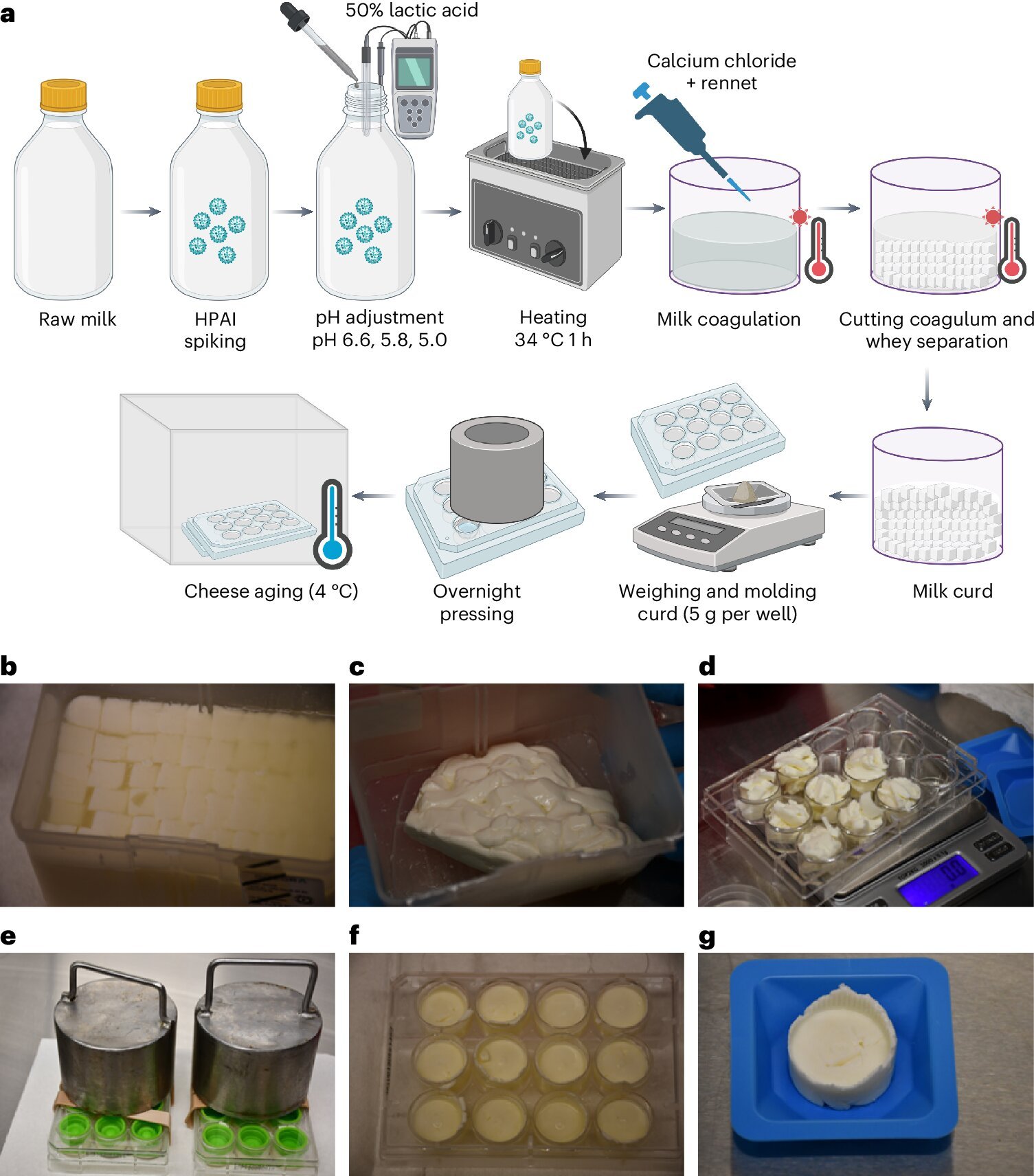
Raw milk cheese products have been found to contain infectious avian influenza virus when made with contaminated raw milk, posing potential health risks for consumers, as per a recent study published in Nature Medicine. However, no virus was detected in test samples of highly acidic raw milk cheese, such as feta.
The research, led by senior author Diego Diel, a virology professor at Cornell University, aimed to assess the stability of highly pathogenic avian influenza H5N1 in raw milk cheese products. The study was prompted by previous findings showing high levels of virus shedding in milk from infected cows and the ability of the virus to survive in refrigerated raw milk for extended periods.
Despite the Food and Drug Administration’s requirement for raw milk cheese to be aged for a minimum of 60 days at or above 35°F to eliminate pathogenic bacterial contaminants, the study found viable avian influenza virus in cheese aged for 120 days at 39°F. The pH level of the cheese was also a critical factor, with acidic cheeses showing no presence of the virus compared to cheeses with a pH between 5.8 and 6.6.
To prevent contamination of raw milk cheese products, the researchers suggested testing milk prior to cheese making, using virus-free milk, or heating milk at sub-pasteurization temperatures to inactivate the virus while retaining the desired qualities of raw milk cheese. The study also included an animal experiment where ferrets were fed contaminated raw milk and cheese, with results showing infection in animals that ingested raw milk but not in those that consumed raw milk cheese.
The team developed an experimental model using mini cheeses made with raw milk spiked with H5N1 virus to simulate real-world scenarios. Commercial cheddar cheese samples tested positive for the virus, highlighting the importance of monitoring raw milk sources in cheese production.
Overall, the study provides valuable insights for the dairy industry to mitigate the risks associated with avian influenza contamination in raw milk cheese products. Further research is needed to understand the mechanisms behind the virus’s interaction with different dairy products and explore additional preventive measures to ensure food safety.
