
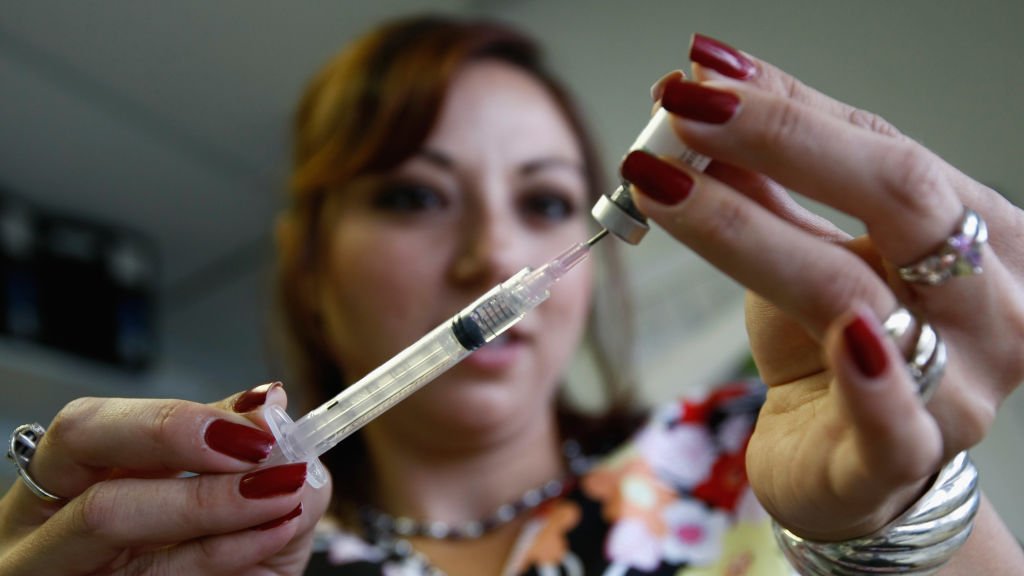
ATLANTA — A federal advisory panel has made the decision to restrict access to the combined measles, mumps, rubella, and varicella shot for low-income children under the age of 4. The panel, known as the Advisory Committee on Immunization Practices, voted to limit access to the combined vaccine in order to minimize the risk of seizures associated with the first dose.
Instead of receiving the combined MMRV shot, low-income children under 4 will still be able to receive separate MMR and varicella shots. The Centers for Disease Control and Prevention has expressed a preference for this approach due to the slightly higher seizure risk associated with the combined first dose.
The decision to restrict access to the combined vaccine came after a day of deliberation and confusion within the committee. A previous vote on whether to include the MMRV vaccine in the Vaccines for Children (VFC) program, which provides low-cost or free vaccines for uninsured or Medicaid-insured children, was met with uncertainty and ultimately resulted in a re-vote.
During the meeting, the committee also voted 8-3 (with one member abstaining) to recommend that children receive the MMR and varicella vaccine in separate shots. This recommendation aligns with the CDC’s preference and aims to ensure the safety and efficacy of the vaccination process for children.
The committee chair, Martin Kulldorff, acknowledged the need to revisit the vote due to technical issues that were not fully understood at the time. The re-do vote on Friday ultimately passed with nine votes, with three members abstaining from the decision-making process.
Overall, the decision to restrict access to the combined MMRV vaccine for low-income children under 4 reflects the committee’s commitment to prioritizing the safety and well-being of vulnerable populations. By offering separate MMR and varicella shots, the committee aims to provide children with the necessary protection against these infectious diseases while minimizing potential risks associated with vaccination.