
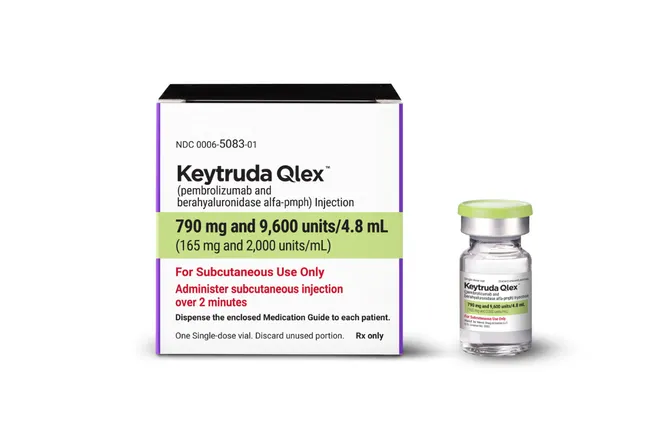
Merck’s Keytruda Faces Competition with Subcutaneous Version Launch
Merck & Co. is gearing up to face direct competition to its flagship cancer medication, Keytruda, with the launch of a subcutaneous version known as Keytruda Qlex. This new development comes after receiving regulatory approval last month, and it is expected to shake up the landscape in oncology. The subcutaneous version of Keytruda offers a faster delivery method, taking only one or two minutes compared to the half-hour infusion of the original drug. Keytruda Qlex has been approved for 38 solid tumor indications, providing a more convenient option for patients.
Keytruda has been a powerhouse for Merck, earning nearly $29.5 billion in sales in 2024 and holding the title of the world’s bestselling drug. However, sales are projected to peak at almost $32.7 billion next year before beginning a gradual decline. By 2032, sales estimates for Keytruda are expected to drop to just over $7 billion. In contrast, Keytruda Qlex is forecasted to see a steady rise in sales, reaching over $7 billion by 2032. This new subcutaneous version is seen as a game changer for Merck, extending their market share and revenue potential post-loss of exclusivity.
The development of Keytruda Qlex has been a yearslong journey for Merck. The company partnered with Alteogen in 2020 to access hyaluronidase technology, allowing for a more efficient delivery of biologic drugs like Keytruda. Other immunotherapies, such as Opdivo Qvantig and Tecentriq Hybreza, have also received subcutaneous approvals, but Keytruda Qlex is expected to have a larger impact due to the success of the original drug. Patients and physicians now have a more accessible route for treatment with the subcutaneous version, providing a significant improvement in cancer care.
The goal of Merck’s phase 3 pivotal trial for Keytruda Qlex was to demonstrate non-inferiority to the original drug, and the results showed a 45% overall response rate in non-small cell lung cancer compared to 42% for the original Keytruda. Patients preferred the subcutaneous version, leading to changes in the physical layout of infusion centers to accommodate the new delivery method. The switch from IV to subcutaneous therapy is expected to be well-received by patients, offering a more convenient and efficient treatment option.
Payers are also likely to favor the new subcutaneous version due to its cost efficiency and ease of use. Merck has priced Keytruda Qlex at parity with the original drug, making it an attractive option for payers looking to optimize healthcare spending. With the launch of Keytruda Qlex, Merck is not only expanding its market reach but also enhancing the overall patient experience in cancer care.