
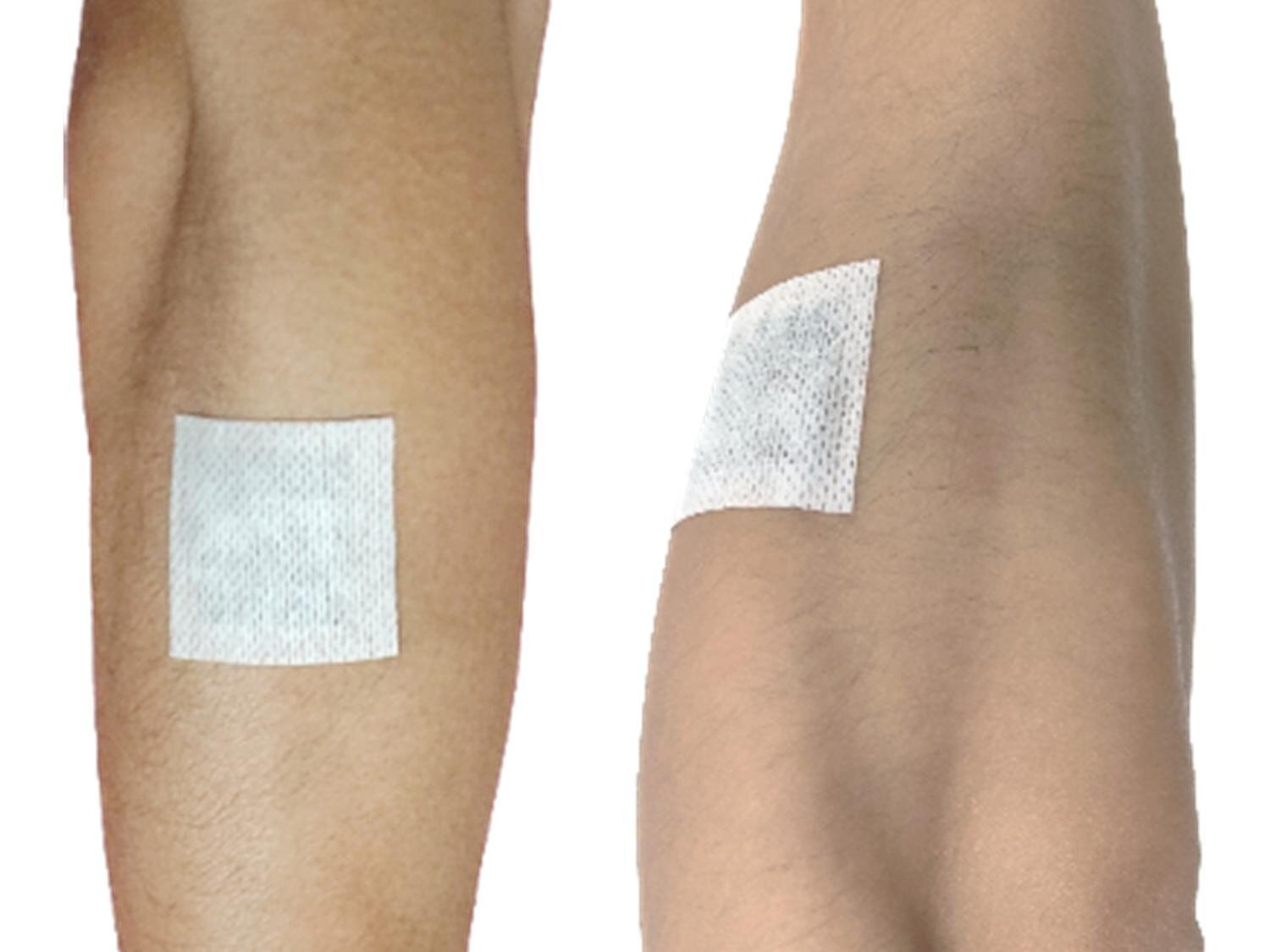
Vitamin B6 is a crucial nutrient that plays a significant role in immune system function and neurotransmitter production in the brain. However, individuals with chronic conditions like diabetes may experience low concentrations of vitamin B6, leading to a range of health issues such as irritability, depression, anemia, and muscle twitching. Monitoring vitamin B6 levels traditionally involves expensive blood draws, but a team of researchers led by Huanyu “Larry” Cheng at Penn State University has developed a groundbreaking noninvasive approach for continuous monitoring.
Cheng and his team have created an on-skin sensing platform that can detect vitamin B6 in small concentrations of sweat, eliminating the need for frequent laboratory tests. This sensor is also capable of detecting glucose at a high sensitivity, allowing diabetic patients to monitor both glucose and vitamin B6 levels simultaneously. The researchers published their innovative approach in the journal Composites Part B: Engineering.
The key to the team’s success lies in the development of laser-induced graphene (LIG) nanocomposites, which serve as a sensor scaffold for detecting vitamin B6. By incorporating molecularly imprinted polymers (MIPs) into the sensor design, the researchers were able to target and detect trace amounts of vitamin B6 present in sweat. MIPs are synthetic polymers with predefined recognition sites that mimic biological receptors, allowing them to selectively bind to target molecules like vitamin B6.
The sensor utilizes a combination of MIPs and Prussian blue redox probes to measure vitamin B6 levels in sweat by detecting changes in electrical current. With a limit of detection of just 0.93 nanomolar, the sensor is highly sensitive and well-equipped to monitor vitamin B6 levels effectively. Additionally, the researchers conducted on-body testing of the sensor for glucose, achieving a limit of detection of 93 nanomolar, which surpasses the sensitivity of other glucose-monitoring devices.
Cheng envisions the sensor’s adaptability for detecting a wide range of biomarkers beyond just vitamin B6 and glucose. By simply swapping out the MIPs to target different proteins of interest, such as female reproductive hormones or indicators of infectious diseases like sepsis, the sensing platform can be customized for various health monitoring applications.
Continuous monitoring of vitamin B6 and other essential nutrients can provide valuable insights into overall health and immune system function. By detecting fluctuations in vitamin B6 levels, healthcare providers can identify patients at risk of compromised immune systems, particularly those with chronic conditions like diabetes. This early detection could prompt patients to make necessary lifestyle changes to maintain optimal health and prevent illness.
The development of this on-skin sensing platform represents a significant advancement in noninvasive health monitoring, offering a convenient and efficient way to track essential nutrients and biomarkers in real-time. As Cheng and his team continue to explore the potential applications of their technology, the future of personalized health monitoring looks promising.
