
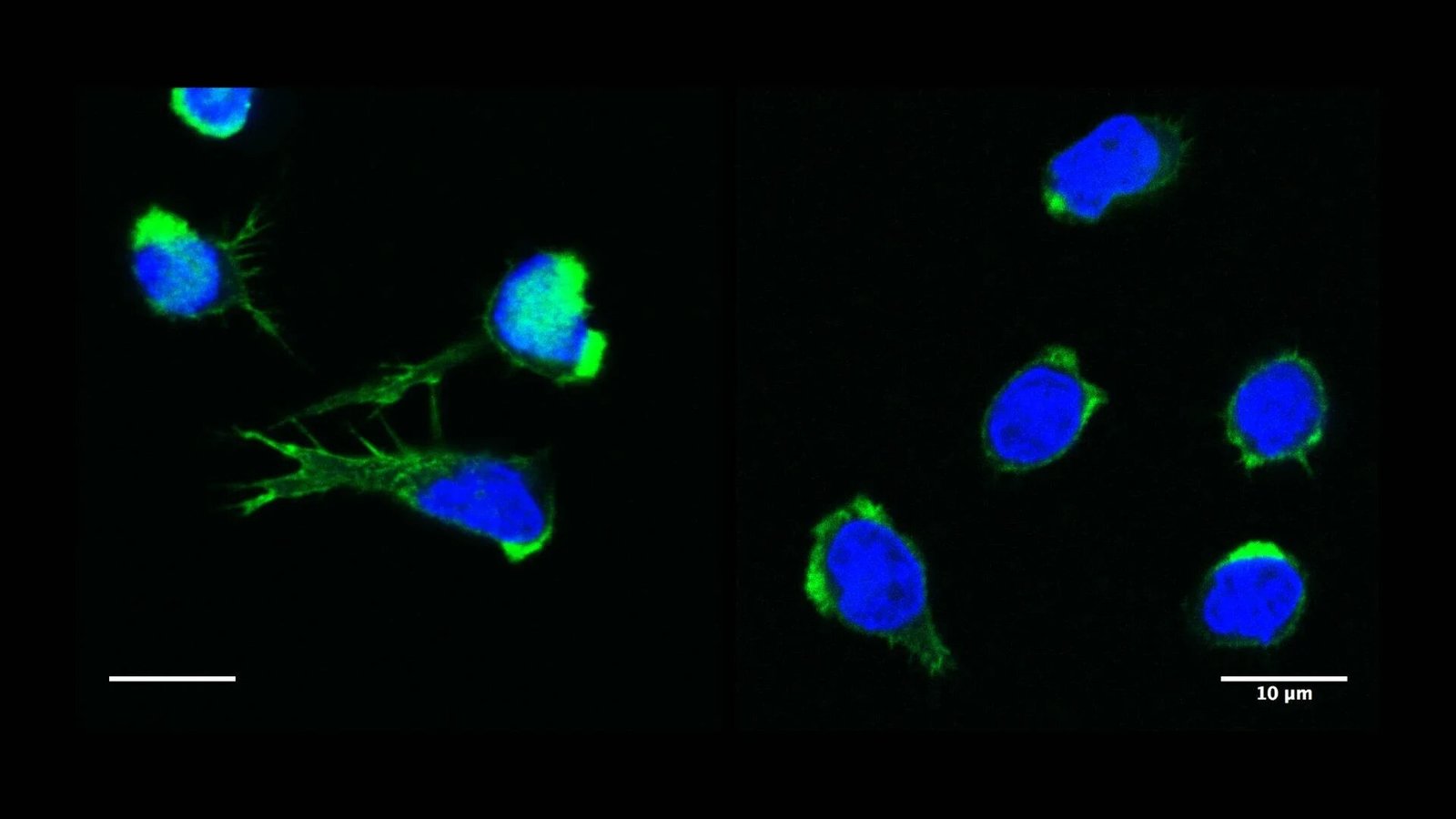
The actin cytoskeleton plays a crucial role in the function of immune cells, going beyond just providing structural support. Immune cells are able to migrate to infection sites and establish brief, precise contacts with other cells by constantly reshaping their actin cytoskeleton. Genetic mutations that disrupt the molecular machinery controlling actin dynamics can lead to impaired immunity, autoimmunity, and chronic inflammation.
Professor Kaan Boztug, the newly appointed Clinical Director of Pediatric Immunology and Rheumatology at the University Hospital Bonn (UKB), specializes in studying inborn errors in immunity. Together with researchers Loïc Dupré and Irinka Castanon, they recently published a comprehensive overview of immune-related actinopathies in Nature Reviews Immunology.
Actin is a protein that forms filaments which organize into networks within cells, providing shape and enabling movement. Specialized proteins regulate the assembly and disassembly of actin filaments to allow cells to respond to their environment. Mutations in genes encoding these actin-regulatory proteins have been linked to nearly 30 inborn errors of immunity.
Individuals with immune-related actinopathies are more susceptible to infections and often experience autoimmune and autoinflammatory symptoms. These disorders can disrupt the normal function of immune cells, leading to autoimmune reactions and chronic inflammation. The diversity of symptoms in patients with similar actin-related mutations suggests that additional genetic and environmental factors play a role in the manifestation of these disorders.
Future research will focus on using mouse models to differentiate between direct effects of actin mutations and other influencing factors. Understanding immune dysregulation at a systems level, considering interactions between different cell types within the immune system, will be crucial for developing targeted therapies and improving clinical care for affected patients.
To further advance our understanding of immune-related actinopathies, larger patient cohorts will be studied to identify biomarkers and predict individuals at risk. The goal is to translate the growing knowledge of cellular and molecular mechanisms into effective clinical interventions. Through ongoing research and collaboration, the field of immunology continues to uncover the intricate relationship between the actin cytoskeleton and immune function.