
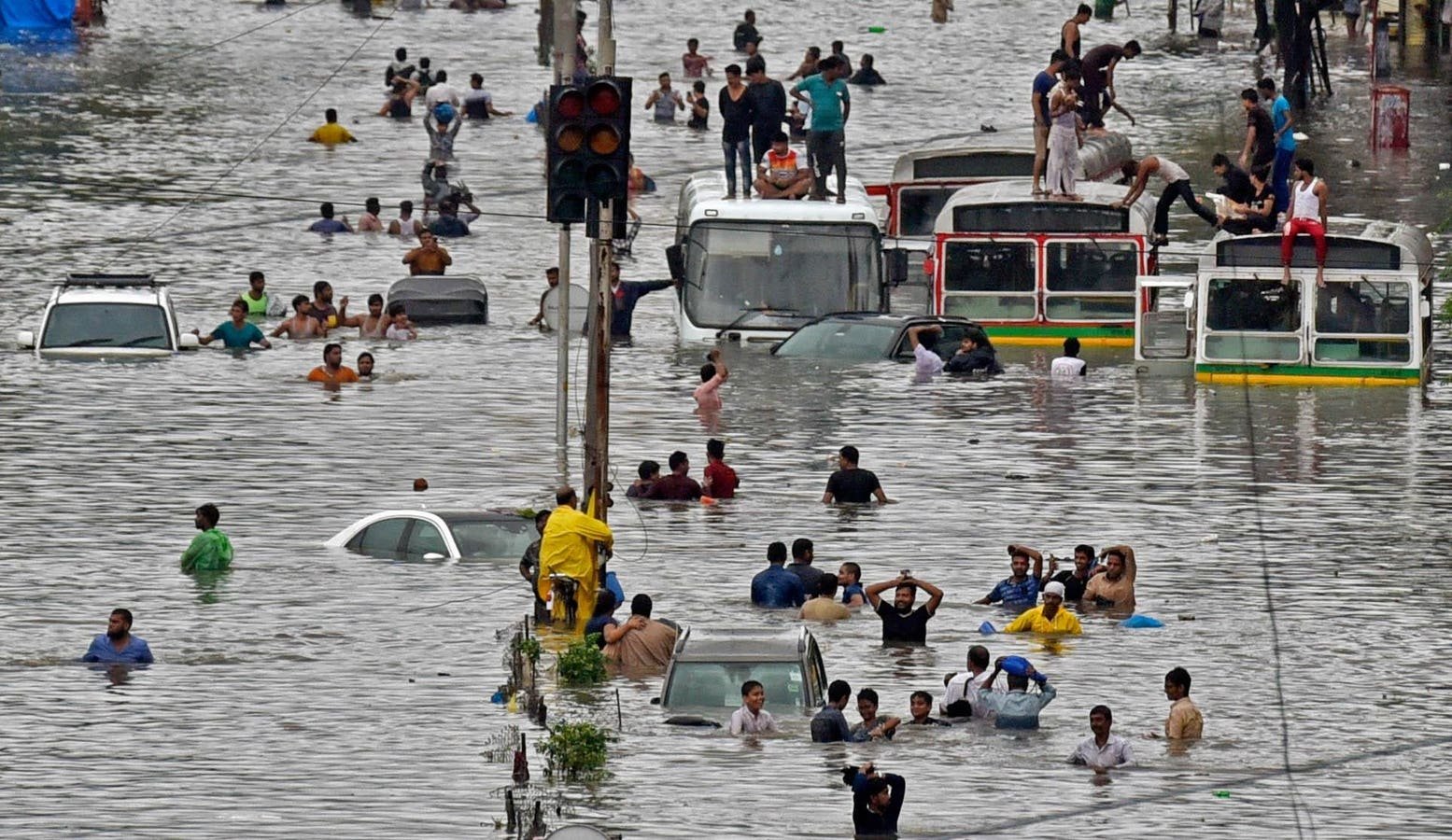
MUMBAI, INDIA – SEPTEMBER 4: People walk through a flooded street following heavy monsoon rains at LBS road Kurla, on September 4, 2019 in Mumbai, India. Heavy rain pounded Mumbai on Wednesday, bringing the city to a halt. Train services were affected while streets were waterlogged, leading to traffic jams. In just 4 days, rainfall received by Mumbai exceeded the average rainfall for the entire month of September. (Photo by Kunal Patil/Hindustan Times via Getty Images)
Hindustan Times via Getty Images
India’s financial capital and largest city, Mumbai, faces significant challenges due to climate change-induced floods. Research shows that extreme rainfall during the monsoon season, which lasts from June to September, contributes to about 8% of the city’s annual deaths. Tragically, 80% of those who perish during flooding events, particularly during high tides, reside in Mumbai’s sprawling slum areas.
A recent study published in the journal Nature on November 12, 2025, highlights the disproportionate impact of rainfall on vulnerable populations. Children under five years old face the highest mortality risk, followed by women. The study reveals that heavy rainfall, in conjunction with high tides, overwhelms drainage systems, increasing the flood hazard in Mumbai and other cities globally.
Analysis of data from 2006 to 2015 shows that a single day of 150mm rainfall leads to a 5.3% increase in mortality among children under 5, compared to 1.6% among adults aged 5 to 64, and 2.3% among those over 65. Women are at a higher risk of mortality than men during heavy rainfall events.
The study emphasizes the impact of rapid urbanization on cities in the developing world, where infrastructure development has not kept pace with population growth. Unplanned urbanization has left vulnerable populations exposed to life-threatening hazards, especially in slum areas.
The researchers warn that future sea-level rise will exacerbate flooding risks, making effective water and flood management crucial for public health and urban planning. They call for investments in infrastructure to mitigate the impact of heavy rainfall, particularly in slum areas where the majority of mortality occurs.
The lead author, Tom Bearpark, and his team stress the importance of improving water, sanitation, and drainage systems in urban areas to reduce mortality rates. They suggest that similar declines in mortality, as seen in developed countries, can be achieved through investments in safe water and sanitation in developing urban areas.
As urban populations continue to grow, especially in slum areas, understanding the importance of these investments is critical for future research and policy development.