
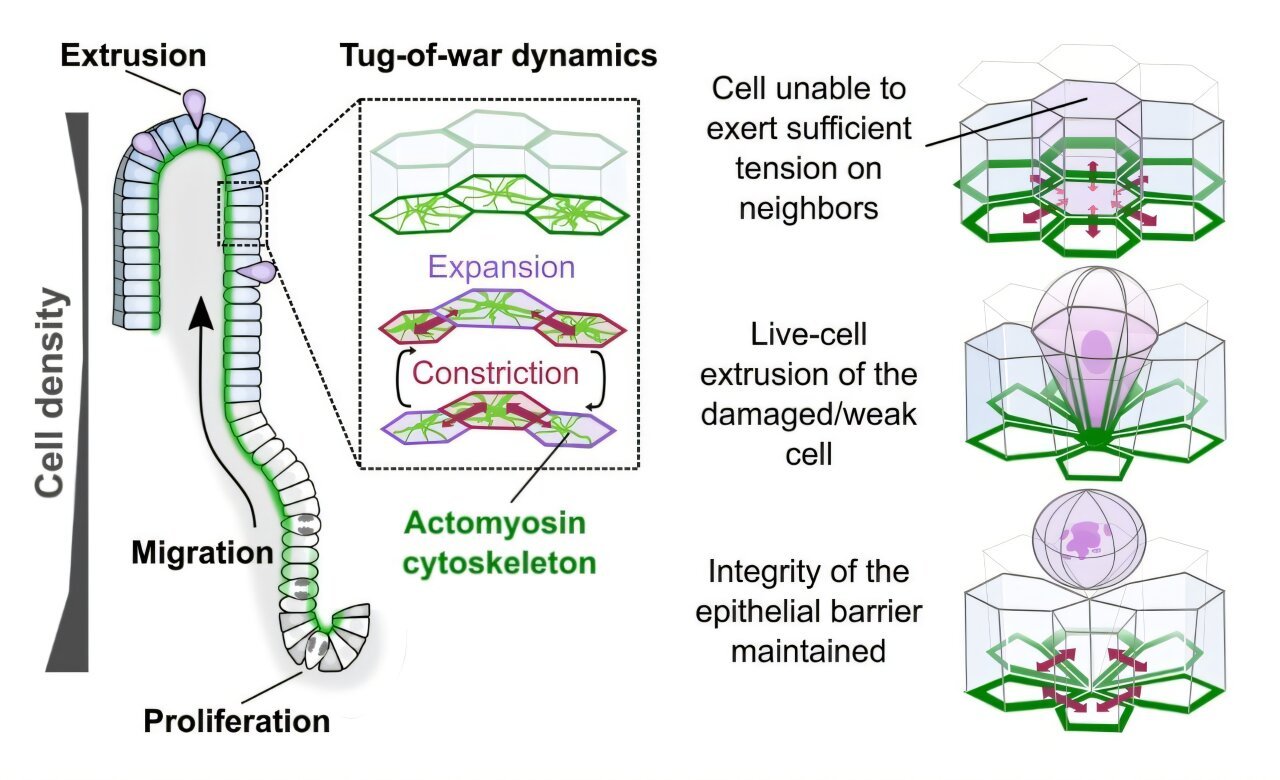
This new understanding of how intestinal cells interact and regulate their own extrusion is crucial for maintaining the integrity of the intestinal epithelial barrier. When cells are unable to generate enough tension to pull at their neighbors, they are extruded from the intestine to prevent any compromise in the barrier function.
These findings shed light on how a malfunctioning intestine can lead to various diseases and infections. Understanding the intricate mechanisms at play within the intestinal surface cells can provide valuable insights for developing new therapeutic approaches for gastrointestinal disorders.
Implications for Research and Treatment
By studying intestinal organoids in the lab, researchers can now observe and manipulate these pulling forces between cells, offering a unique opportunity to investigate the underlying mechanisms in greater detail. This knowledge can pave the way for targeted interventions to modulate cell extrusion in cases of intestinal dysfunction.
Furthermore, this research highlights the importance of mechanical forces in cellular behavior and tissue homeostasis. The dynamic interplay between cells within the intestinal epithelium underscores the complexity of tissue maintenance and repair processes.
Overall, this study provides a fascinating insight into the tug-of-war competition that dictates the fate of intestinal surface cells. By unraveling the forces at play in this microscopic battlefield, scientists are one step closer to understanding the intricate workings of the human intestine and its implications for health and disease.
This disease is characterized by a lack of villi, the small finger-like projections on the surface of the intestine that help with nutrient absorption. In their experiments, Daniel and Kasper found that the cells in these organoids were weaker and more likely to be extruded from the tissue.
This finding sheds light on how diseases like congenital tufting enteropathy can disrupt the delicate balance of forces between cells in the intestine, leading to improper closure of the intestinal barrier and inflammation. Understanding the role of cell strength and interactions in maintaining intestinal health could lead to new insights into the treatment and prevention of intestinal diseases.
Overall, the experiments conducted by Daniel and Kasper provide valuable insights into the dynamics of cell interactions in the intestine and how they can impact intestinal health. By studying the tug of war game played by cells in organoids, researchers can gain a better understanding of how diseases develop and progress in the intestine. Further research in this area could pave the way for new treatments and interventions to maintain intestinal barrier function and prevent inflammation.