
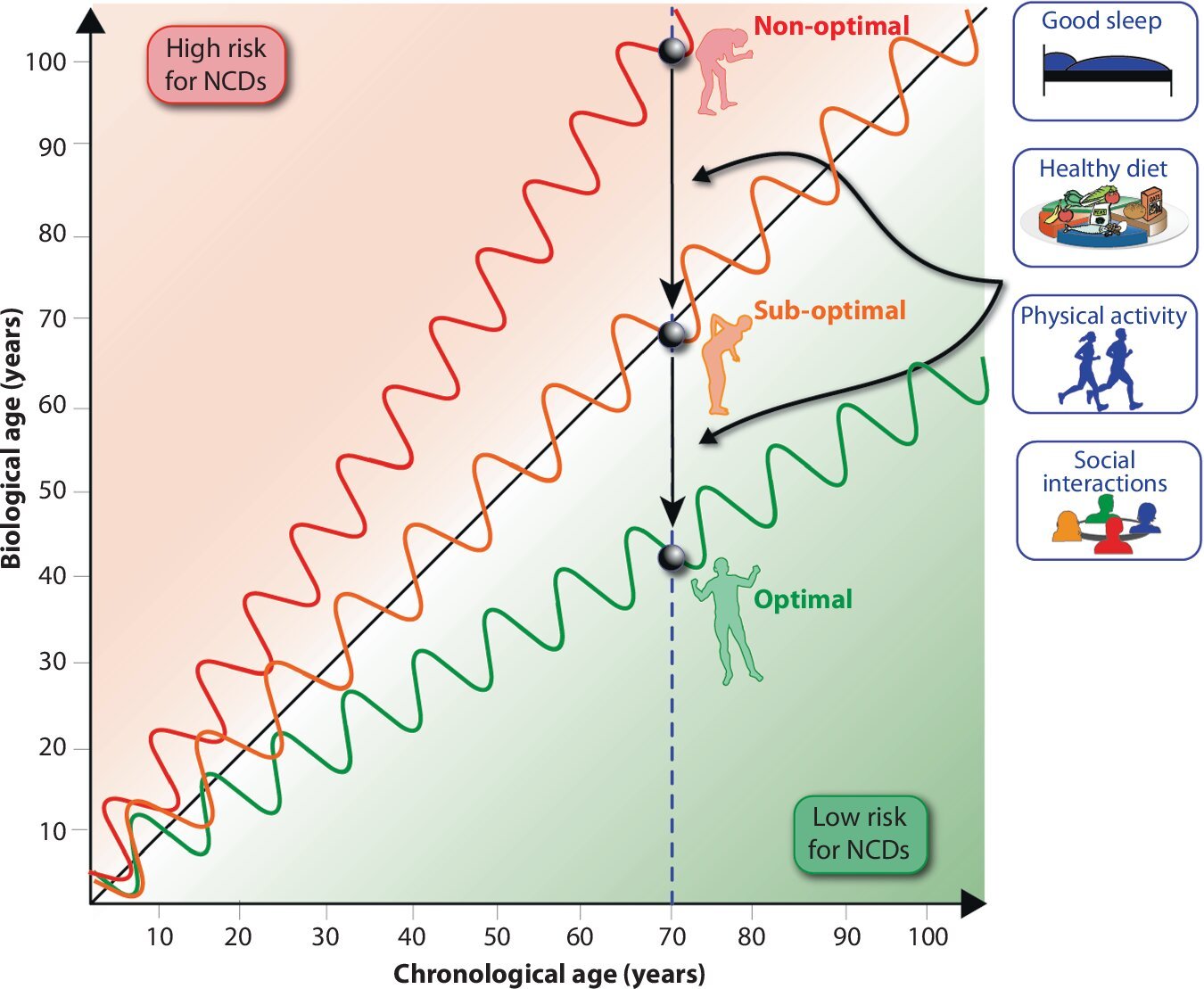
Aging is a natural process that affects everyone, but did you know that the food you eat can actually impact how quickly or slowly you age? A recent perspective published in npj Aging sheds light on the connection between diet, lifestyle choices, and biological aging. The researchers explain that biological age, which reflects the overall health and function of an individual, can diverge significantly from chronological age. By making targeted nutritional and lifestyle choices, it may be possible to steer the trajectory of aging towards a healthier outcome.
Professor Carsten Carlberg from the University of Eastern Finland emphasizes the importance of nutrition in influencing the rate of biological aging. He advocates for a shift from generic dietary advice to personalized dietary strategies that can effectively lower biological age.
Recent studies suggest that lifestyle factors such as diet, exercise, sleep, and social engagement can have a significant impact on the aging process. Individuals who adopt healthy habits tend to have a biological age that is younger than their actual age, while those with unhealthy lifestyles may experience accelerated aging and increased risk of chronic diseases.
Food contains numerous bioactive compounds that can act as molecular signals to regulate biological aging. However, there is still much to learn about these compounds, with over 139,000 substances remaining poorly understood. By harnessing the power of these food-derived signals, it may be possible to slow down the aging process and promote healthier aging.
Tracking biological age can be done using various aging clocks, which are computational models based on epigenetic, proteomic, or microbiome data. These clocks can help identify interventions that slow down aging and improve overall health. For instance, predictive clocks like GrimAge can be used to monitor the effectiveness of anti-aging interventions.
Research has shown that adhering to plant-rich diets such as the Mediterranean diet, AHEI, and DASH diets can double the chances of healthy aging, preserving cognitive, physical, and mental function in old age. The gut microbiome, which is heavily influenced by diet, emerges as a key target for dietary interventions aimed at slowing down aging. By shaping the gut microbiome through diet, it is possible to modulate inflammation, circadian rhythms, and immune function, offering multiple avenues for precision nutrition interventions.
The authors of the perspective article call for urgent action to address the challenges of aging populations worldwide. They highlight the need for validation and standardization of aging biomarkers, mapping of food-derived bioactive compounds, and building partnerships to translate precision nutrition research into clinical practice and public health policies.
In conclusion, the link between food, lifestyle, and biological aging offers a promising avenue for promoting healthy aging. By making informed dietary choices and adopting healthy habits, individuals can potentially slow down the aging process and enjoy a higher quality of life in their later years.