
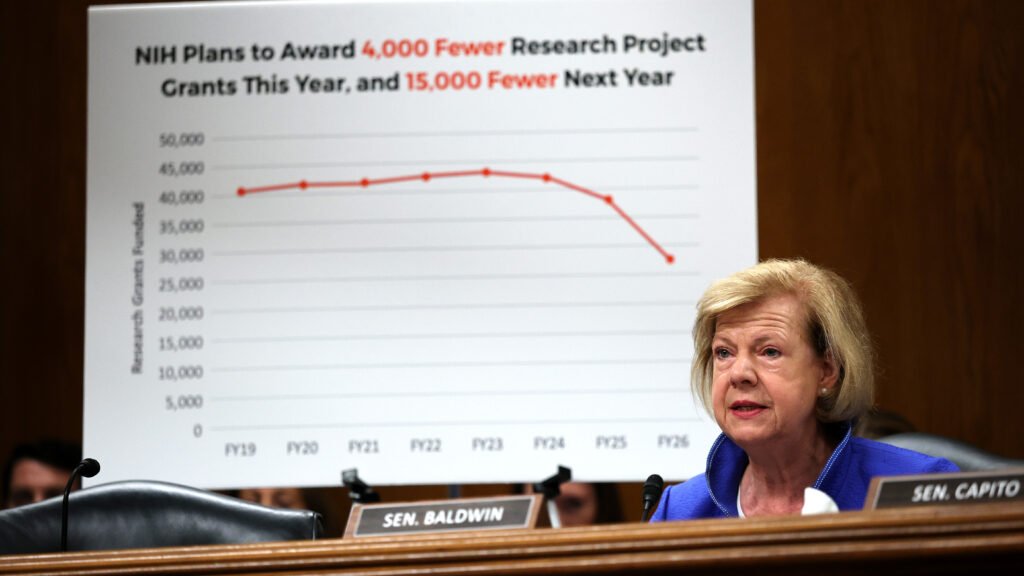
The National Institutes of Health (NIH) has recently announced a significant change in its grant application process, leading to a reduction in the number of grants awarded for the remaining two months of the fiscal year. This new policy, introduced by the Trump administration, will have far-reaching implications for researchers and institutions across the country.
One of the most affected branches of NIH is the National Cancer Institute, which has informed scientists that only 4% of grant applications will be funded, a drastic decrease from the previous 9%. This sharp decline in funding availability will undoubtedly increase competition among researchers, making it more challenging to secure essential funding for their projects.
The policy change primarily impacts R01 grants, which serve as the foundation of scientific research for many universities and medical centers. These grants are crucial for supporting research labs, funding graduate students and post-docs, acquiring equipment and materials, and even covering researchers’ salaries. However, certain early-career grants and training grants are exempt from the new policy.
The implications of this policy shift are significant, as it will force researchers to compete for a limited pool of funding, potentially stalling essential scientific advancements. Unless Congress intervenes, this more restrictive funding policy will remain in place for the next budget year, starting on October 1st.
In light of these changes, researchers and institutions will need to strategize and adapt to the new funding landscape to ensure that critical research projects continue to move forward. Stay tuned for updates on how the scientific community navigates these challenges and works towards securing the necessary resources to advance groundbreaking research in the field of health and medicine.