
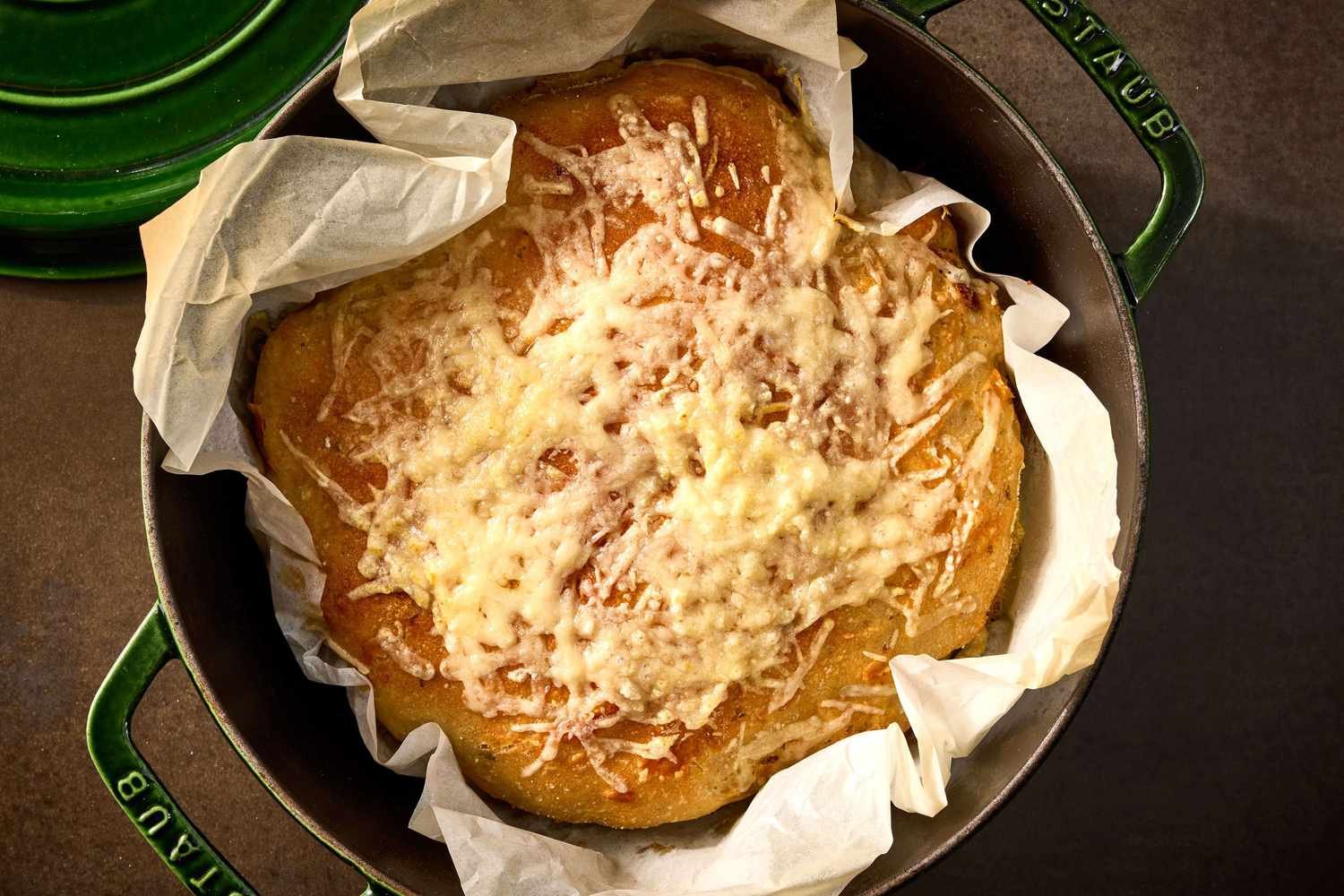
No-knead bread has become a popular baking project for many home cooks, as it requires minimal effort but yields impressive results. The process involves mixing flour, yeast, salt, and water together, then allowing the dough to rest overnight in the refrigerator. This extended fermentation period not only develops the flavor of the bread but also makes it easier to handle the next day.
One of the key components that elevate the flavor of no-knead bread is the addition of roasted garlic, rosemary, and Parmesan cheese. The roasted garlic adds a subtle sweetness and depth of flavor, while the rosemary infuses the bread with a fresh herbal aroma. The Parmesan cheese brings a savory umami note and contributes to a golden crust on top of the loaf.
The beauty of no-knead bread lies in its simplicity. There is no need for kneading or special equipment, aside from a Dutch oven and parchment paper. The Dutch oven plays a crucial role in creating a bakery-style crust by trapping steam and providing even heat distribution during baking. If you don’t have a Dutch oven, you can use an oven-safe stainless steel pot with a tight lid as an alternative.
Chilling the dough overnight may require some patience, but it is essential for developing flavor and improving the texture of the bread. The cold fermentation process helps to build a more complex flavor profile and allows the gluten to develop, resulting in a light and airy crumb.
When it comes to serving the bread, there are endless possibilities. Enjoy it warm with salted butter or olive oil and sea salt, or use it for sandwiches the next day. No-knead bread pairs well with a variety of dishes, from red-sauced pastas to roasted meats and stews.
In the end, making no-knead bread is a rewarding experience that allows home cooks to enjoy bakery-quality bread without the need for extensive kneading or fancy equipment. With a little time and patience, you can create a delicious loaf of bread that will have you coming back for more.