
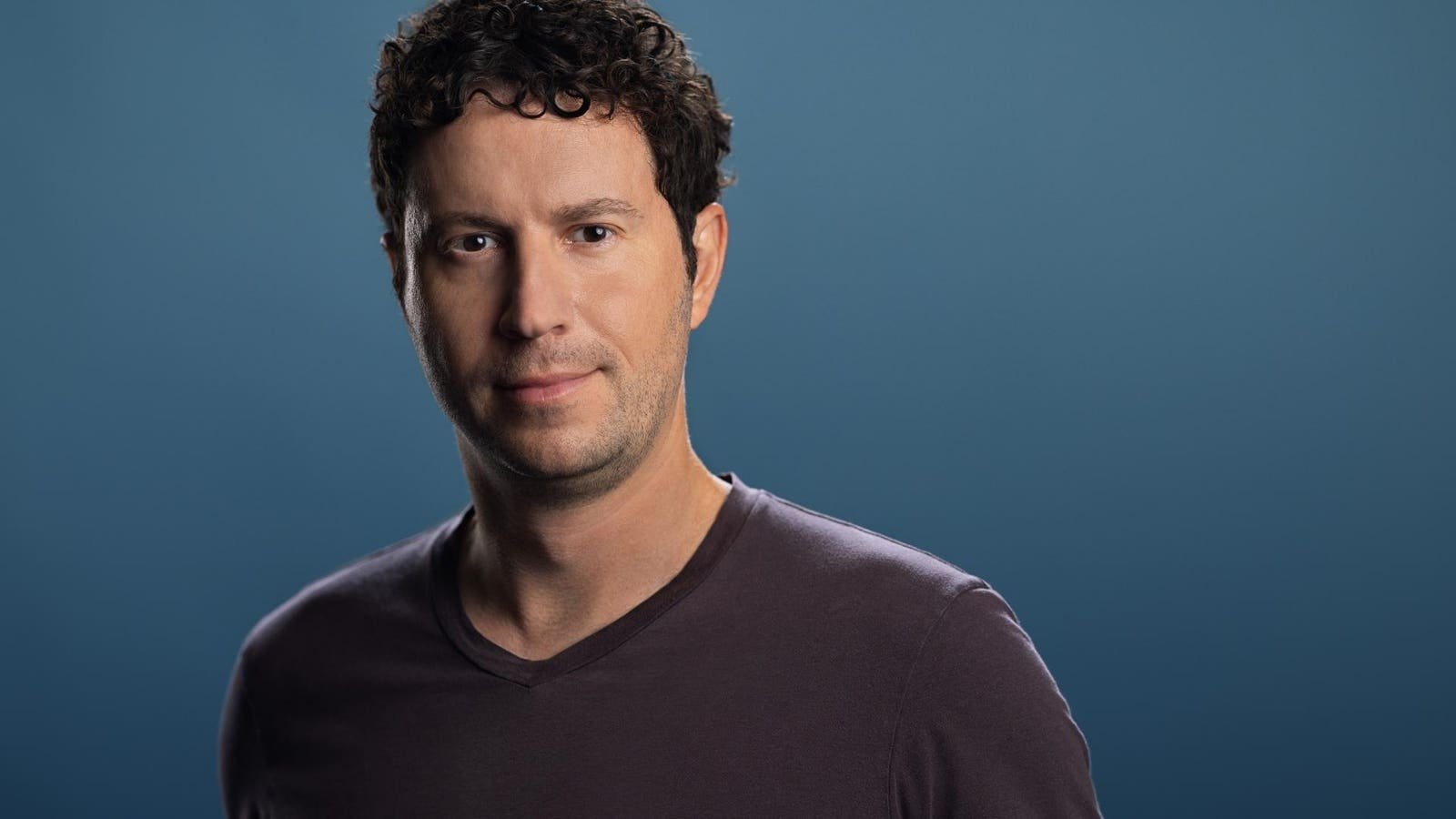
Daniel Nadler founded OpenEvidence to assist doctors in navigating the overwhelming amount of medical research available. Recently, he secured $210 million in funding at a $3.5 billion valuation.
Keeping up with the latest medical advancements can be daunting for physicians, with new research being published every 30 seconds. Nadler recognized this challenge and developed artificial intelligence algorithms to help doctors quickly find the most relevant information from millions of peer-reviewed publications. The software, which is free for verified doctors, generates revenue through advertising, similar to Google’s model.
Since its establishment in 2022, OpenEvidence has gained 40% of doctors in the U.S. as users and is adding thousands more each month. With an estimated annual revenue of $50 million, the company attracted $210 million in funding from investors like GV and Kleiner Perkins, valuing the company at $3.5 billion. Nadler’s stake in the company makes him a billionaire, with a net worth of $2.3 billion.
OpenEvidence’s success lies in its ability to provide doctors with accurate and timely information to aid in patient care. By leveraging AI technology, the company has become a valuable tool for healthcare professionals facing an increasingly overwhelming amount of medical literature. After obtaining his Ph.D. in political economy, where his thesis focused on credit derivatives pricing mechanisms, he also studied poetry with Pulitzer Prize-winner Jorie Graham, developed an app called Sigmund for influencing dreams during sleep, and served as a visiting scholar at the Federal Reserve.
While working on his Ph.D. and earning $23,500 annually as a grad student, Nadler founded his first company, Kensho, after realizing that the Fed’s regulators were using basic Excel spreadsheets for crucial assessments. Teaming up with programmer Peter Kruskall, they created algorithms to simplify financial analysis. When Kensho introduced its text-based chatbot, Warren, in 2012, artificial intelligence was not yet a prominent aspect of startups. However, the idea was successful, and when Kensho was acquired by S&P for $700 million, Nadler, who owned 20%, became wealthy.
In 2021, Nadler partnered with Ziegler, a Ph.D. student in machine learning, to develop OpenEvidence with the belief that AI technology could assist doctors in a significant way. Both were personally motivated by experiences involving medical issues. Investors like venture capitalist Jim Breyer recognized the potential of OpenEvidence and supported the project. Joining the Mayo Clinic’s health tech startup accelerator in 2023, Nadler’s expertise in AI began to pay off as the company’s technology was refined.
Despite the success, there are concerns about the reliability of AI-based search results. Nadler assures that OpenEvidence relies on reputable medical sources to provide accurate information. Dr. Stephen Krieger from Mount Sinai found OpenEvidence’s information reliable and useful in his clinical practice. While some experts caution that medical literature can be flawed, OpenEvidence’s medical director, Dr. Travis Zack, believes the platform reduces errors compared to traditional methods.
OpenEvidence’s ad model, which targets pharmaceutical companies, remains unproven. By offering sponsored answers to keep the tool free for doctors, the company hopes to attract more users and improve its search results based on their feedback. OpenEvidence is creating what Nadler refers to as a “fantasy flywheel,” where an increase in users leads to a better product, attracting even more users in a continuous cycle. Despite healthcare and pharma ad spending reaching $30 billion in 2024, it is uncommon for healthtech companies to build ad-based businesses, as most software is typically sold on a subscription basis. Nadler acknowledges the criticism of advertising in the industry but expresses his fondness for it, noting that the company currently has a significant inventory of ads worth over $350 million that has yet to be utilized. He draws a parallel to Google’s approach of familiarizing people with the advertising model.
Dr. Aneesh Singhal from Massachusetts General Hospital downloaded OpenEvidence a year ago after learning about it through a mass email. He has observed the tool gaining popularity among his colleagues and residents, noting its superiority to generic chatbots like ChatGPT in providing thorough and insightful information on medical topics.
OpenEvidence’s rapid growth in signing up doctors has impressed investor Breyer, who views this as a key indicator of success. The company is now delving into reasoning models to enhance AI capabilities, with the recent launch of DeepConsult, a feature that aids in in-depth research and analysis on specific medical topics.
While OpenEvidence’s technology could potentially expand into other scientific fields, Nadler is currently focused on healthcare, particularly in areas with limited access to quality care. The startup aims to consolidate various AI-powered tools in healthcare, such as clinical diagnostic aids and patient data management, to create a comprehensive platform for medical professionals.
Coatue cofounder Thomas Laffont envisions OpenEvidence becoming a central hub for diagnostic tools and medical information integration, potentially revolutionizing the diagnostic process in the future.
