
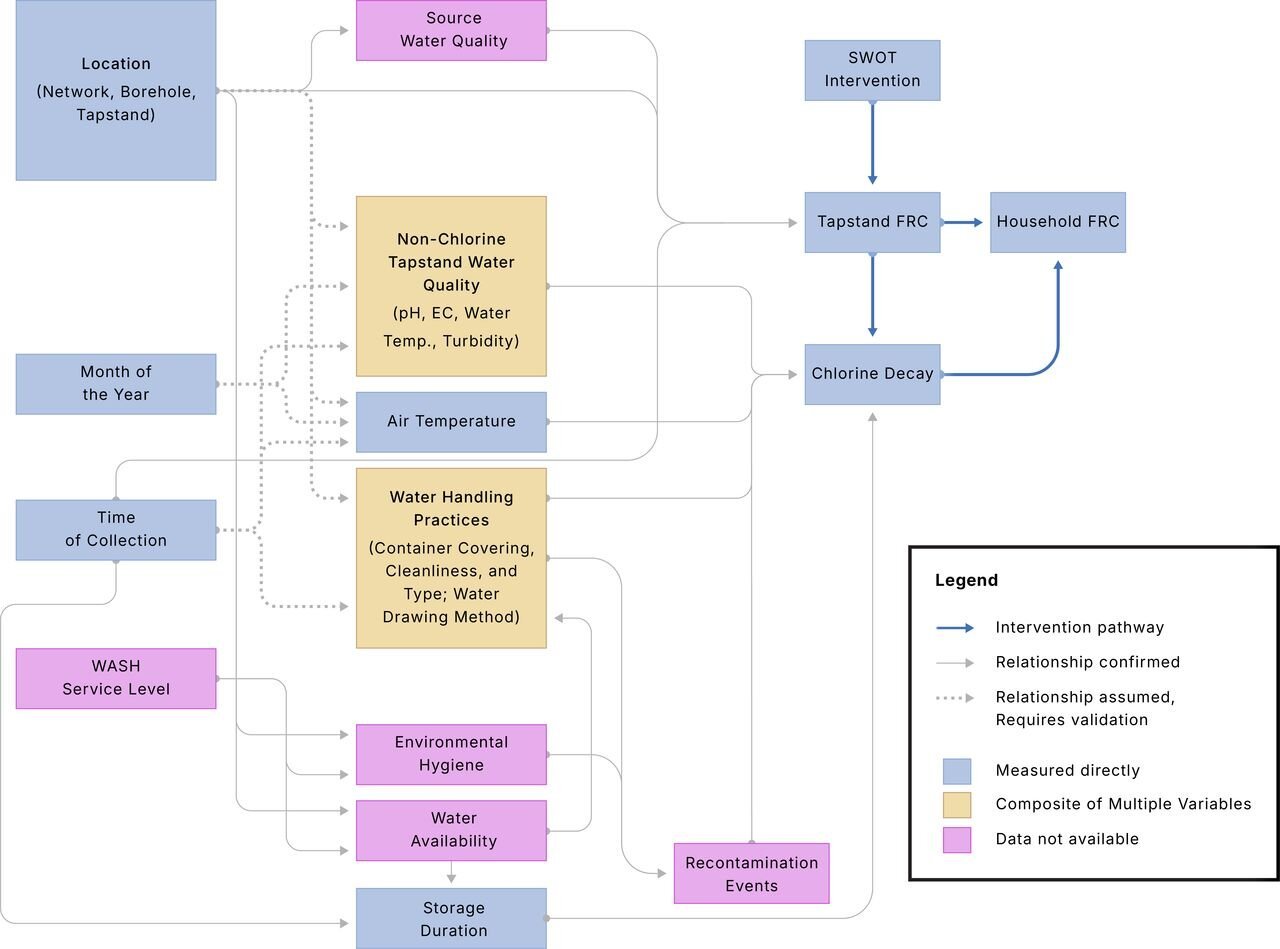
A groundbreaking study conducted by researchers at York University has revealed the significant impact of utilizing a machine learning-enabled tool, the Safe Water Optimization Tool (SWOT), in optimizing chlorination levels for safe drinking water in refugee camp water supplies. Lead author Syed Imran Ali emphasizes that the SWOT outperforms standard guidelines for safe water supply in humanitarian response, delivering safe drinking water at nearly three times the rate.
The study, published in BMJ Global Health, analyzed water-quality data from the Kutupalong-Balukhali refugee settlement in Bangladesh, where the SWOT had been implemented. The results showed that households following SWOT guidelines achieved safe water 90% of the time, compared to only 35% with the universal guideline typically used in humanitarian response. The researchers emphasized the importance of integrating water monitoring teams and water treatment operations to optimize chlorination levels effectively.
The SWOT tool, developed by Ali and his colleagues, is a free, open-source online tool designed to generate site-specific and evidence-based chlorination levels in refugee camps using routine monitoring data. Since its inception, the SWOT has provided safe water for over 700,000 people globally, including recent collaborations in Yemen, Gaza, and Uganda. Ali stresses the critical need for evidence-based solutions in the humanitarian sector, especially amidst reduced resources and operational challenges.
The collaborative effort involved in the development and implementation of the SWOT tool underscores the importance of innovation and evidence-based practices in ensuring safe water systems in humanitarian emergencies. The study’s findings provide valuable insights into improving water quality and enhancing the effectiveness of humanitarian responses in providing essential life support systems.
For more information on the study, you can refer to the publication in BMJ Global Health: “Proof-of-concept evaluation at Cox’s Bazar of the Safe Water Optimization Tool: water quality modelling for safe water supply in humanitarian emergencies” (2025). DOI: 10.1136/bmjgh-2024-018631.
This research highlights the transformative potential of technology and data-driven approaches in addressing critical challenges related to safe water supply in humanitarian contexts. The SWOT tool represents a significant advancement in optimizing water treatment processes and ensuring access to safe drinking water for vulnerable populations worldwide.