
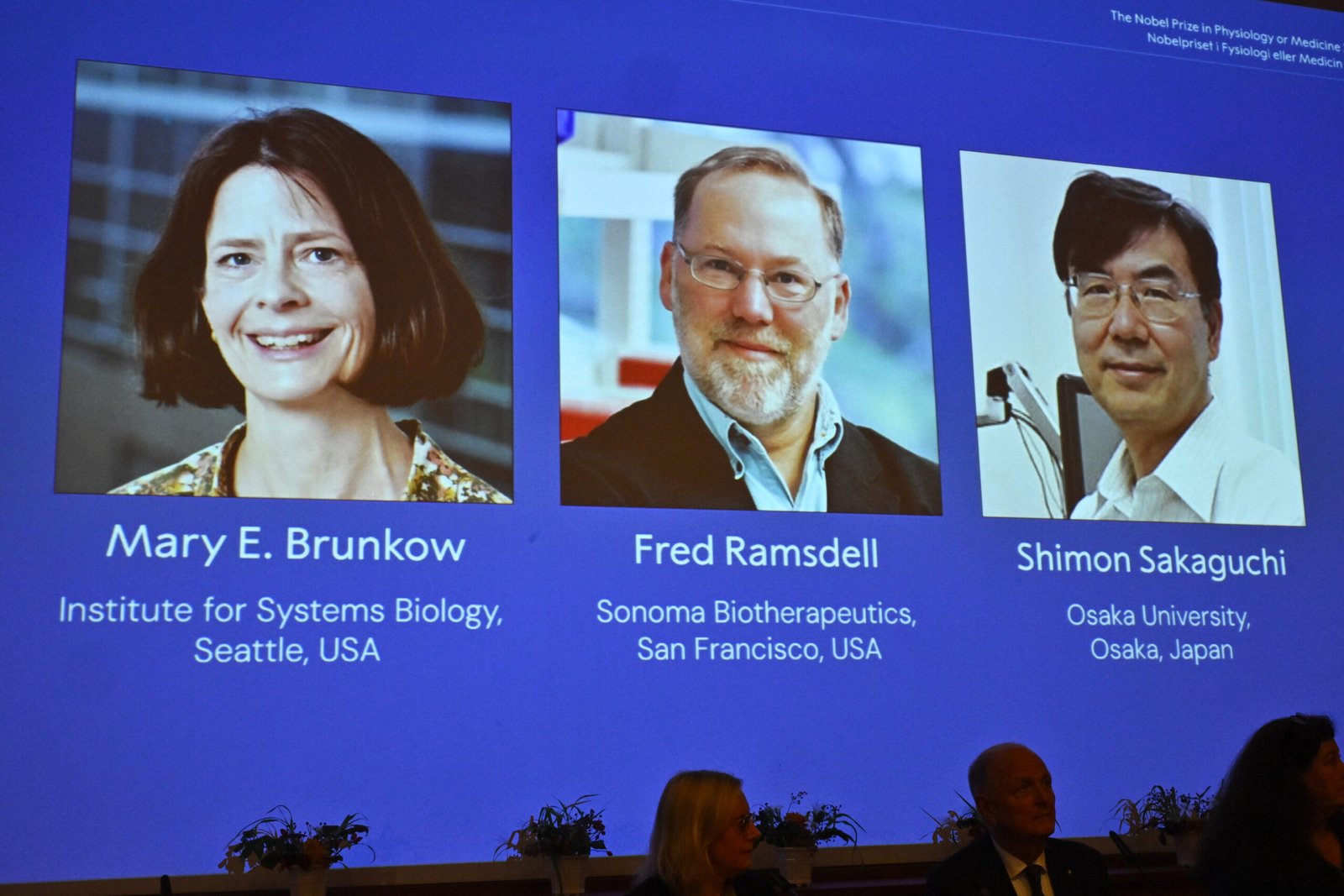
The 2025 Nobel Prize in Medicine or Physiology has been awarded to Mary E. Brunkow, Fred Ramsdell, and Dr. Shimon Sakaguchi for their groundbreaking discoveries in the field of peripheral immune tolerance. This prestigious award recognizes their significant contributions to understanding how the body maintains immune balance to prevent autoimmune diseases and other disorders.
Mary E. Brunkow, aged 64, is a senior program manager at the Institute for Systems Biology in Seattle. Fred Ramsdell, also 64, serves as a scientific adviser for Sonoma Biotherapeutics in San Francisco. Dr. Shimon Sakaguchi, aged 74, is a distinguished professor at the Immunology Frontier Research Center at Osaka University in Japan. Together, their research has paved the way for new advancements in medical treatments for cancer, autoimmune diseases, and organ transplantations.
Peripheral immune tolerance is a critical mechanism that helps the immune system distinguish between self and non-self antigens. The laureates’ work, which dates back to 1995, has significantly advanced our understanding of how the immune system maintains self-tolerance and prevents autoimmune reactions. Sakaguchi’s initial discovery was followed by key breakthroughs made by Brunkow and Ramsdell in 2001, leading to a comprehensive understanding of peripheral tolerance and its implications for medical treatments.
According to the Nobel Assembly, their discoveries have spurred the development of novel therapies that are currently undergoing clinical trials. These treatments hold promise for improving outcomes in cancer patients, individuals with autoimmune diseases, and those undergoing organ transplantation. The laureates’ research has laid the foundation for future advancements in immunology and personalized medicine.
Upon receiving the news of their Nobel Prize win, Dr. Shimon Sakaguchi expressed his gratitude and honor, emphasizing the significance of this recognition in his illustrious career. Thomas Perlmann, Secretary-General of the Nobel Committee, was able to reach Sakaguchi by phone to deliver the news, and he left voicemails for Brunkow and Ramsdell.
The Nobel Prize in Medicine announcement marks the beginning of a week-long series of Nobel Prize announcements, with awards in physics, chemistry, literature, peace, and economics set to follow. The 2025 Nobel Prize winners in each category will be revealed in the coming days, celebrating groundbreaking achievements in their respective fields.
Impact on Medicine and Beyond
The groundbreaking discoveries made by Mary E. Brunkow, Fred Ramsdell, and Shimon Sakaguchi have revolutionized our understanding of the immune system and autoimmune diseases. Their work has paved the way for new treatment strategies and therapies that could potentially benefit millions of people worldwide.
By identifying regulatory T cells and the role of the Foxp3 gene in immune tolerance, the laureates have provided crucial insights into how the immune system maintains a delicate balance between protecting the body from foreign invaders and avoiding self-attack. This knowledge is not only relevant to autoimmune diseases but also to cancer immunotherapy and organ transplantation, where immune tolerance plays a critical role.
Furthermore, their discoveries highlight the importance of basic research in driving medical progress. The Nobel Prize in Physiology or Medicine 2025 recognizes the value of curiosity-driven science and the impact it can have on human health.
Recognition and Celebration
The awarding of the Nobel Prize in Physiology or Medicine to Mary E. Brunkow, Fred Ramsdell, and Shimon Sakaguchi is a momentous occasion that will be celebrated by the scientific community and beyond. Their contributions to the field of immunology have been instrumental in advancing our understanding of human health and disease.
The trio will be honored at the award ceremony on December 10, the anniversary of Alfred Nobel’s death. This prestigious recognition underscores the importance of their work and its lasting impact on medicine.
Congratulations to Mary E. Brunkow, Fred Ramsdell, and Shimon Sakaguchi on this well-deserved honor. Their dedication to scientific discovery and commitment to improving human health have truly made a difference in the world.