
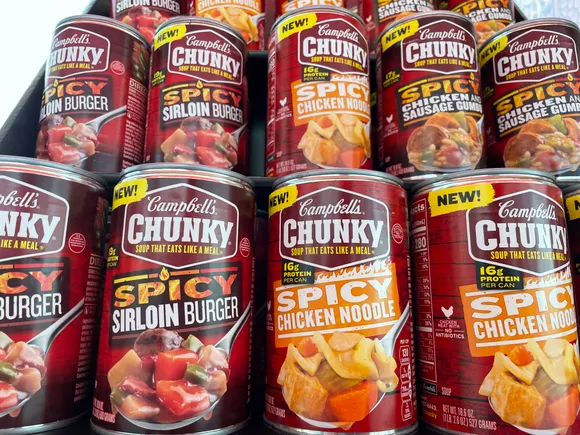
The Trump administration’s 50% tariff on imported steel is expected to have a significant impact on canned food prices, potentially increasing them by 9% to 15%, according to the Consumer Brands Association (CBA). This trade group estimates that up to 20,000 U.S. food manufacturing jobs could be at risk if consumers reduce their purchases of higher-priced canned goods due to the tariffs. Additionally, CPG companies may choose to switch from tin-plate steel to cheaper packaging alternatives in response to the increased costs.
The steel tariffs are affecting a wide range of products in the food industry, including sauces, seafood, soup, and vegetables. As the White House imposes higher tariffs on steel and aluminum, the CBA is highlighting the negative consequences for manufacturing and consumer shopping habits. While most ingredients and inputs for food products are sourced domestically, there are exceptions, such as tin mill steel. Domestic can makers and canned food producers import nearly 80% of this material from foreign trade partners.
Conagra Brands CEO Sean Connolly has stated that his company has no choice but to import the majority of its canned food packaging, as about 75% of tin plate steel lines in the U.S. have been eliminated since 2018. Other food and beverage manufacturers, such as Campbell’s and Coca-Cola, have also expressed concerns about the impact of tariffs on their operations. Campbell’s imports tinplate steel for cans and canola oil for chips, noting that trade headwinds could affect its fiscal-year earnings. Coca-Cola has hinted at the possibility of shifting some products from aluminum cans to PET bottles if input costs rise due to new tariffs.
Overall, industry stakeholders are urging the Trump administration to consider the supply chain dependencies and protect all U.S. manufacturers, workers, and consumers in its approach to tariffs. The CBA emphasizes the importance of recognizing these dependencies to mitigate the potential negative effects on the food industry. As the situation continues to unfold, companies are working to find ways to manage and mitigate the impact of increased costs on their businesses.