
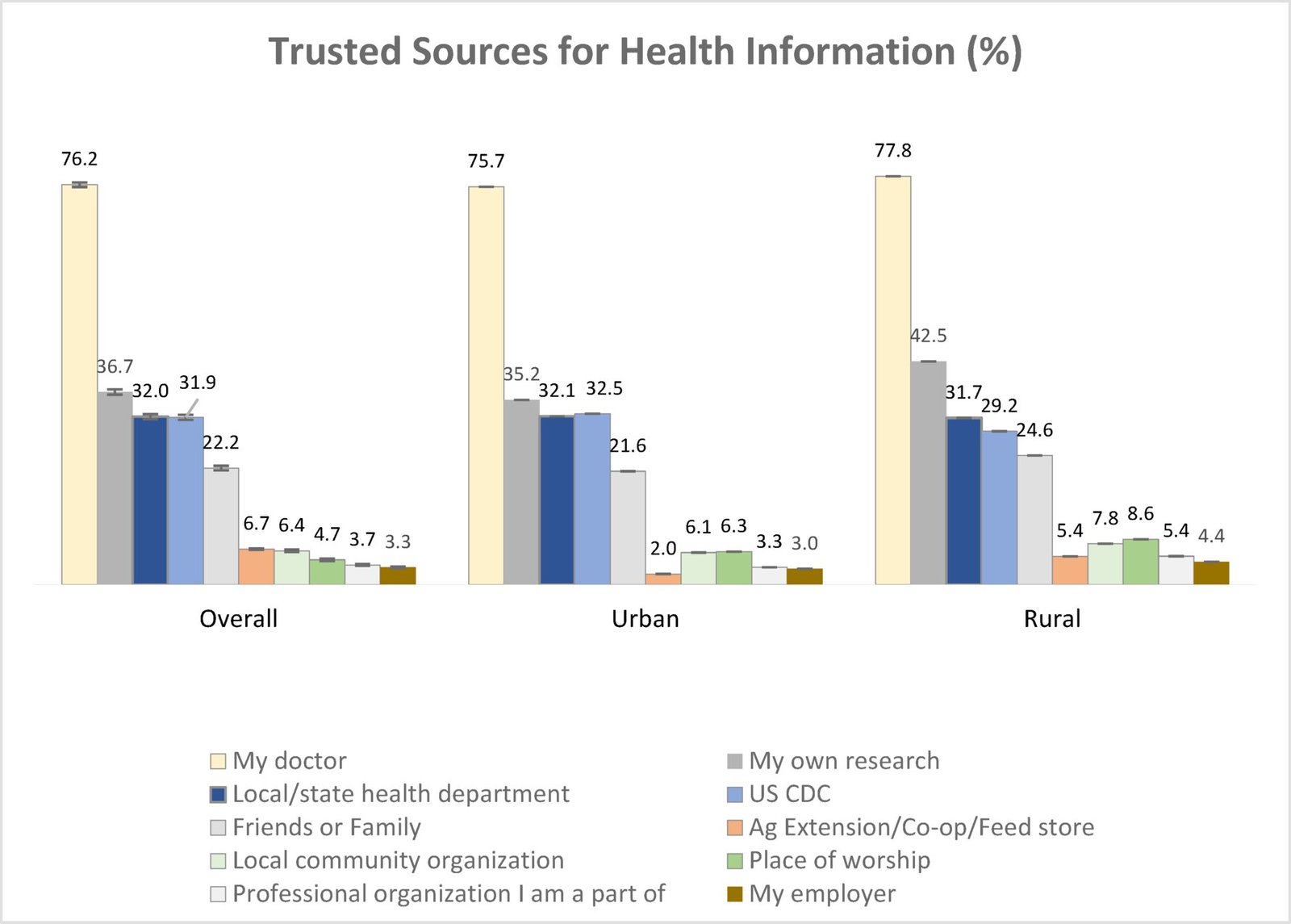
During the 2024 H5N1 avian influenza outbreak in the United States, a new study led by researchers at the City University of New York School of Public Health (CUNY SPH) found that physicians emerged as the most trusted public health messengers. This study, published in the journal Scientific Reports, revealed that individuals placed a high level of trust in their doctors for health information during the crisis, even more so than institutional sources such as the CDC, state or local health departments, or family and friends.
The research indicated that 76% of respondents reported trusting their doctor for health information, with over half of them turning to their physicians for vaccine guidance. However, the study also highlighted disparities in trust, with Black and Hispanic respondents expressing lower levels of trust in physicians compared to white respondents. This disparity underscores the importance of addressing communication inequalities in public health.
Interestingly, both urban and rural residents reported similar levels of trust in doctors. Rural respondents, however, tended to be older, less likely to have private insurance, and more likely to identify as Republican or white. This information suggests that tailored communication strategies are essential for reaching diverse communities during public health crises.
Given the declining trust in government institutions, the study emphasized the critical role that physicians can play in effective risk communication. Lead author Rachael Piltch-Loeb, an assistant professor at CUNY SPH, emphasized the need for public health strategies to leverage the trust people have in their healthcare providers, especially during emerging threats like H5N1.
CUNY SPH Dean Ayman El-Mohandes, the senior author of the study, highlighted the importance of addressing disparities in trust across different demographic groups. He stressed the need for better training and support for healthcare providers to ensure consistent and effective messaging for all communities.
In conclusion, the study findings underscore the need for healthcare providers to serve as a bridge between evolving science and the public’s everyday health decisions. Effective public health communication should engage physicians as key messengers, while also addressing disparities in trust based on age, ethnicity, income, and political affiliations.
For more information, you can refer to the study titled “U.S. trust in physicians as key public health messengers during the H5N1 avian influenza outbreak” published in Scientific Reports in 2025. The DOI for the study is 10.1038/s41598-025-12304-z. This research was conducted by CUNY SPH researchers and highlights the vital role of physicians in public health communication during crises.
This content has been provided by The City University of New York and can be accessed on their website.