
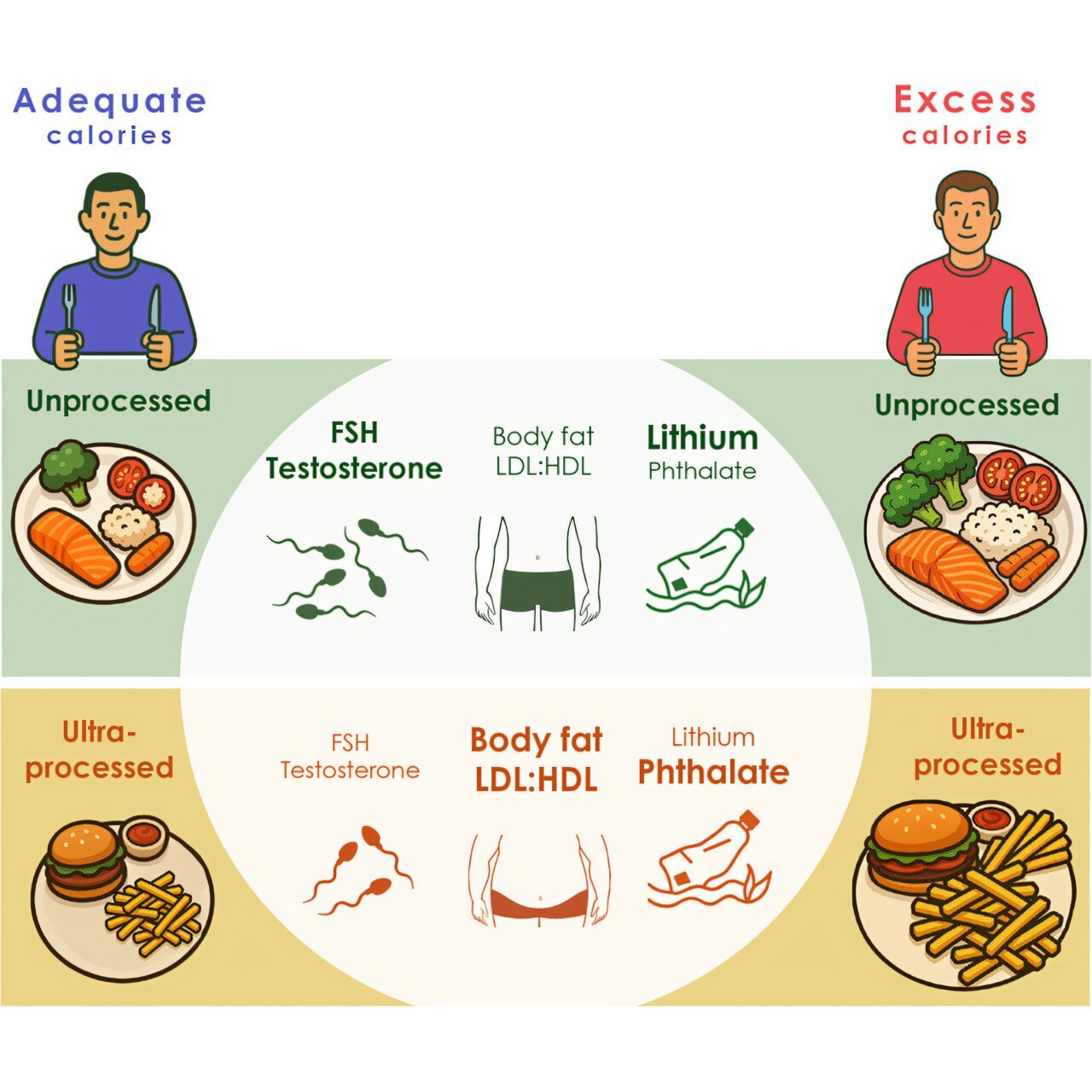
The detrimental effects of ultra-processed foods on men’s health have been a growing concern as rates of obesity, type-2 diabetes, and declining sperm quality continue to rise. A recent study published in the journal Cell Metabolism sheds light on the impact of these foods, revealing that they can harm metabolic and reproductive health, even when consumed in the same amount of calories as minimally processed foods.
The study, conducted by an international team of scientists, involved 43 men aged 20 to 35 who were put on both an ultra-processed diet and a minimally processed diet for three weeks each, with a three-month break in between. Half of the participants were given a high-calorie diet with an extra 500 daily calories, while the other half consumed the normal amount of calories for their size, age, and physical activity levels. Despite the same calorie intake, men on the ultra-processed diet gained around 1 kg more fat mass compared to those on the minimally processed diet.
One of the most concerning findings of the study was the increase in levels of the hormone-disrupting phthalate cxMINP in men on the ultra-processed diet. This substance, commonly used in plastics, has been linked to adverse effects on reproductive health. Additionally, men on the ultra-processed diet experienced decreases in testosterone and follicle-stimulating hormone levels, which are essential for sperm production.
Lead author of the study, Jessica Preston, emphasized that the processed nature of ultra-processed foods is what makes them harmful, even when consumed in moderation. The senior author, Professor Romain Barrès, highlighted the need for revising nutritional guidelines to better protect against chronic diseases associated with the consumption of these foods.
The study’s findings underscore the importance of making informed dietary choices to safeguard both metabolic and reproductive health. Further research and awareness are essential to understanding the long-term implications of consuming ultra-processed foods and developing strategies to mitigate their harmful effects.
For more information, the study titled “Effect of ultra-processed food consumption on male reproductive and metabolic health” can be accessed in the journal Cell Metabolism. Additional details and insights can be found on the University of Copenhagen’s website.