
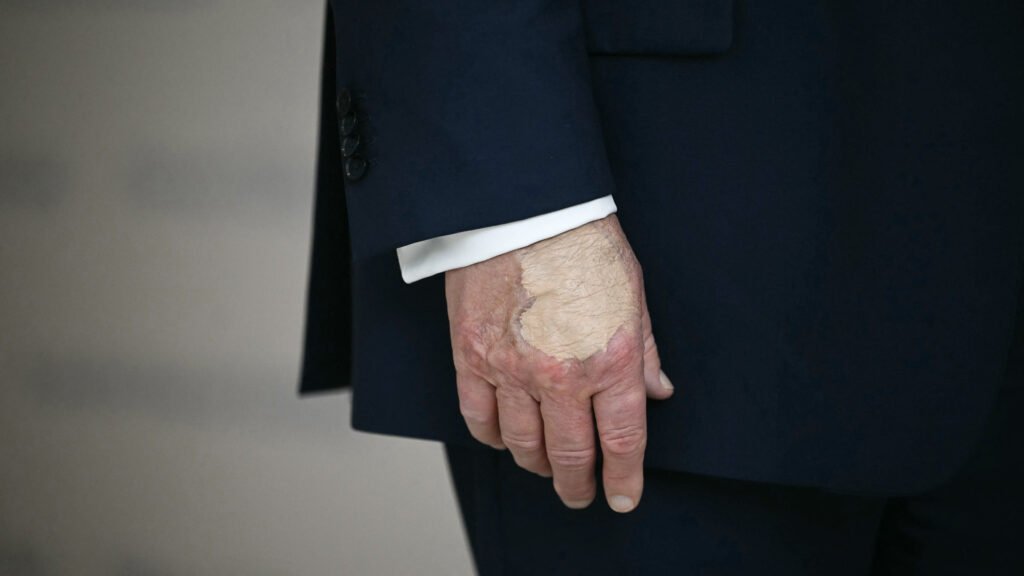
President Trump’s recent bruised hand and the use of makeup to cover the discolored patch of skin have brought attention to his health, particularly his cardiovascular health. This incident sheds light on a condition known as chronic venous insufficiency (CVI), which affects approximately 2.5 million people in the United States. While leg swelling is a common symptom of CVI, bruised hands are not directly related to this condition.
CVI occurs when blood circulates through the body but fails to return efficiently to the heart due to malfunctioning valves in the veins. This can lead to blood pooling in the legs, causing swelling. Compression stockings are a low-tech treatment option that helps push blood towards the heart. In severe cases, medical procedures may be necessary to remove affected veins.
Risk factors for CVI include older age, obesity, smoking, sedentary lifestyle, and other cardiovascular diseases. While CVI is more common in older adults, it can also be genetically influenced. Exercise, weight loss, and wearing compression stockings can help manage symptoms of CVI.
Symptoms of CVI beyond leg swelling include varicose veins, spider veins, and darker spots on the skin where blood has pooled. In severe cases, ulcers may form on the legs and require prompt treatment to prevent complications. Keeping the legs elevated, avoiding high-salt diets, and wearing compression socks can help alleviate symptoms of CVI.
While CVI itself does not lead to deep vein thrombosis, it can develop as a complication of this condition. Individuals experiencing sudden leg pain should seek medical attention for proper diagnosis and treatment. Overall, early detection and management of CVI can prevent serious complications and improve quality of life.
In conclusion, CVI is a common yet often underrecognized condition that can impact an individual’s cardiovascular health. By understanding the symptoms and risk factors associated with CVI, individuals can take proactive steps to manage the condition and prevent complications. Regular medical evaluation and lifestyle modifications play a crucial role in effectively managing CVI and promoting overall health and well-being.